
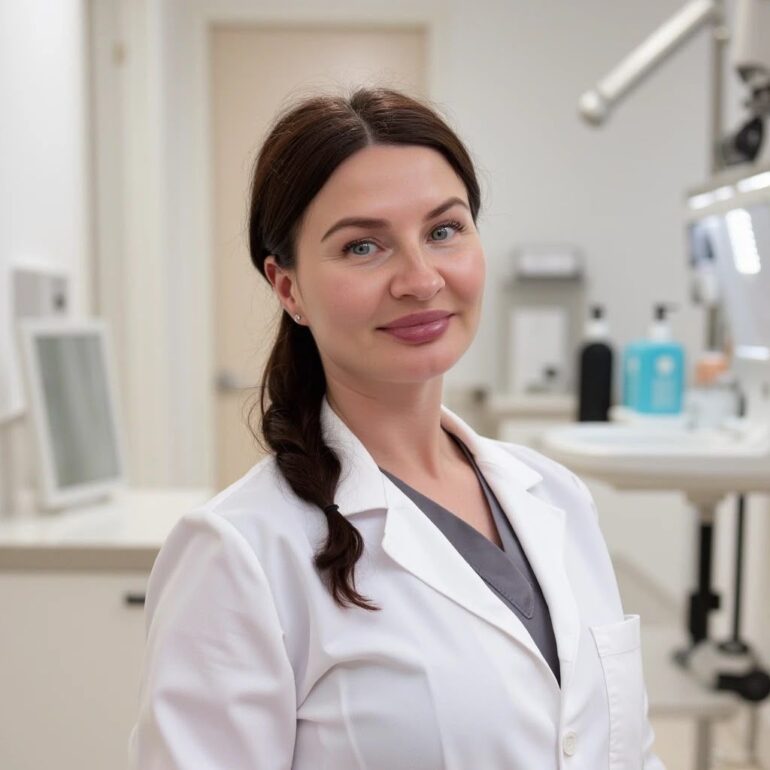
Angelina, your career began in medicine. What led you to nutrition and dietetics?
My professional path truly began in medicine. I received my medical degree in Russia and then completed additional professional training in dietetics. Gradually, my interest increasingly focused on nutrition, metabolic health, insulin resistance, prediabetes, and chronic disease prevention. In my practical work, I saw that people often lacked not so much information about proper nutrition as understandable tools for applying this knowledge in everyday life. This largely determined the future direction of my professional career.
There's a huge amount of information about healthy eating available today. Why do people still find it difficult to change their habits?
Because knowing about healthy eating and applying that knowledge every day are two different things. A person can understand the basic principles of a healthy diet but still face very practical questions: what to buy at the store, what to cook at home, which dish to choose at a restaurant, or how to create a balanced meal. I believe this transition from theory to practice is crucial. Information should help people make independent decisions, not simply remain a set of recommendations.
– What do you think about strict diets and various nutrition systems that promise quick results?
I don't base my work on strict diets and short-term restrictions. Many people have already experienced such approaches. Sometimes they do achieve certain results in a short period, but it's much more difficult to maintain them and make the new diet a part of your daily life. Therefore, I prefer gradual habit changes. It's important to teach people to understand the principles of nutrition, choose foods, and create a diet that they can stick to for much longer than just a few weeks.
– What kind of requests do people most often ask you?
Most often, these are overweight adults with unhealthy eating habits, insulin resistance, prediabetes, or an increased risk of metabolic disorders. I also receive treatment from people who want to improve their nutrition, lose weight, and develop sustainable habits without extreme restrictions.
– How important is it to take into account a person’s lifestyle when working with their nutrition?
This is crucial. It's impossible to consider nutrition completely in isolation from other habits and lifestyle factors. If someone wants to change their weight or improve their health, they need to consider physical activity, sleep, daily routine, and other lifestyle factors. This is especially important in complex cases where a person is simultaneously overweight, has unstable eating habits, and has metabolic risk factors. In such situations, I try to work not with yet another set of restrictions, but with a system of daily habits.
– How do you evaluate the results of your work?
For me, results aren't just about weight loss. To date, I've worked with approximately 50 clients in the field of nutrition and health counseling. I consider changes in eating behavior to be a key indicator: when a person begins to understand the principles of nutrition and make more rational decisions independently. My goal is for people to eventually no longer require constant supervision from a specialist and to be able to use the knowledge they've gained independently.
You're also involved in research. Why is this important to you?
Research allows me to systematize my professional knowledge and continually delve deeper into the issues that interest me. I have authored four scientific publications on nutrition, insulin resistance , and type 2 diabetes. I have also developed my own educational guide on nutrition and metabolic health. It was important to me to make this material accessible to those without a medical background. Complex processes can be explained in an accessible manner without sacrificing scientific accuracy.
You developed the "Plate Balance" concept. Why did you decide to create your own educational tool?
I wanted to present the basic principles of a balanced diet in a simple and understandable form. Constantly counting every gram of food isn't for everyone. In everyday life, it's much more convenient to understand the general structure of a balanced meal and be able to apply this principle in different circumstances. For me, this is also part of an educational approach: people should gradually learn to independently evaluate their diet and make decisions.
You're currently developing your professional career in the United States. What's changed for you since then?
This is a new stage in my professional development. In the US, I continue to develop areas related to nutrition, metabolic health, weight management, and lifestyle changes. At the same time, I continue my scientific and educational work and develop the Easy project. Peasy Eat, which is associated with the use of modern digital technologies in the food industry.
– How did the idea for Easy come about? Peasy Eat ?
It arose from practical experience working with people. A consultation allows for a detailed analysis of a person's diet and explains the basic principles of nutrition. But after the consultation, the person returns to everyday life, where they once again have to make decisions independently: what to buy, what to cook, what dish to choose. I was interested in creating a tool that could support people in precisely these everyday situations.
– What is the project?
Easy Peasy Eat is a digital project being developed to support people with nutritional issues. The concept involves using artificial intelligence technologies to analyze products, dishes, or menu options and provide information tailored to the user's goals and dietary preferences. Features such as meal planning, food diary keeping, progress tracking, and educational information are also planned. Crucially, the project is not intended to replace medical advice. Its purpose is to provide educational support and assistance in making everyday decisions related to nutrition and lifestyle.
How do you assess the impact of artificial intelligence on the food industry?
I believe there's great potential here. Artificial intelligence can make personalized support more accessible and move it from the specialist's office into everyday life. But technology should remain a tool. It doesn't replace professional medical care and shouldn't be seen as a standalone diagnostic or treatment system.
– What changes in modern dietetics do you consider the most noticeable?
I'd highlight several areas. First, the shift from one-size-fits-all diets to a more personalized approach. Second, there's increasing attention being paid to the prevention of metabolic diseases. Third, digital technologies and artificial intelligence are rapidly developing. I'm particularly interested in the combination of these areas, as a personalized approach is becoming more accessible thanks to technology.
– What do you think is the most challenging part of being a nutritionist?
Perhaps the most difficult thing is to understand that there are no universal solutions. Each person has their own habits, routines, preferences, lifestyle, and previous experiences. Therefore, the same recommendation may be effective for one person and completely inconvenient for another. Furthermore, it's important to consider the psychological aspect of changing habits. A person must not only know what they need to change but also understand how to incorporate it into their life.
– What principle do you consider to be the most important in your professional work?
I believe that healthy eating shouldn't be perfect, but rather achievable. Scientific advice loses its practical value if people can't apply it in their daily lives. Therefore, it's important to me to combine medical knowledge, dietetics, education, and modern technology so that people can use the knowledge they gain independently and in the long term.
– What professional goals do you set for yourself now?
My immediate goal is to continue developing my professional activities in the US, expand my scientific and educational work and bring Easy Peasy Eat from the development stage to a functioning digital product. I also plan to continue my professional training, develop collaborations with representatives from the medical and educational fields, and gradually scale up my activities.
– What would you like to change with your professional contribution?
I'd like to make nutrition knowledge more understandable and accessible. People don't always need yet another complicated nutrition system. Sometimes it's much more important to learn to understand your diet, see the connection between your habits and your health, and make more informed decisions every day. This is where I see the main goal of my work.
Anastasia Ponomareva