
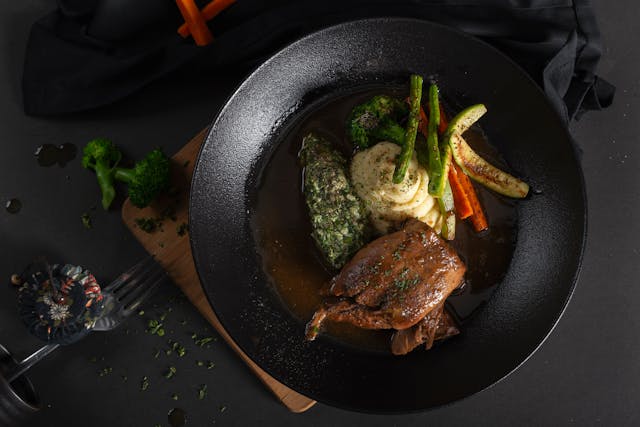
In a commercial kitchen, consistency, safety, efficiency – they are non-negotiable. Sous vide delivers all three, if done right. If you run a restaurant, hotel, or any food business, understanding why sous vide matters, when to use it, how to do it well, and what can go wrong will help you make better decisions (and more profit).
What is Sous Vide & Why It Matters
“Sous vide” means “under vacuum.” It’s a cooking method in which food is sealed (often in plastic) and cooked in water at precisely controlled times and temperatures.
Why it matters: with traditional high-heat cooking, you risk overcooking the outside while waiting for the center to reach safe temperatures. That leads to dryness, loss of texture, uneven doneness. Sous vide lets you avoid that: heat is uniform, doneness is exact, moisture is preserved. Businesses care a lot about that – food that tastes good every time.
Consistency, Safety, and Efficiency in Practice
Here’s what sous vide gives you that you might not get reliably with conventional cooking methods, especially at scale.
Consistency.
- Once you nail the recipe, you can reproduce it exactly. Time and temperature settings, vacuum sealing, computerized monitoring – all of that reduces operator error. Cuisine Solutions says its method prevents shrinkage, overcooking, undercooking.
- Whether making a plate for two or serving 2,000 people, the product can come out uniformly excellent.
Safety.
- Low temperature + extended time can still achieve pasteurization, kill harmful bacteria, if properly controlled. Sous vide also helps because food is sealed, limiting external contamination
- For many sous vide products, once cooked and sealed, the shelf life is dramatically extended. That means less risk of spoilage, inventory loss, food safety problems.
Efficiency & Cost-Control.
- Prep time drops. With sous vide, many items are pre-cooked and just need reheating or finishing touches. So, during busy service, less frantic prep, fewer mistakes.
- Labor savings: less specialized skill needed at every station if many of the hard steps are handled in sous vide preparation or with pre-prepared sous vide items.
- Waste control: less shrinkage, less loss of flavor or moisture meaning less trimming, fewer bad batches. Because sous vide prevents overcooking, undercooking, dryness.
When to Use Sous Vide
You should consider sous vide for center-of-plate meats (steaks, chicken breast, pork, etc.), tough cuts that need long cooking to break down collagen (short ribs, brisket), fish or shellfish where precise doneness really shows, vegetables and sauces where you want gentle cooking.
The Business Case for Cooking with Sous Vide in Commercial Kitchens
Cooking with sous vide in commercial kitchens comes down to measurable outcomes. Thousands of restaurants have already integrated sous vide into daily operations, showing how widely the method has been adopted across the industry. Products prepared this way can carry a frozen shelf life of up to 18 months, which reduces inventory loss, cuts down on rush ordering, and makes supply chain planning more predictable. Prep time and labor needs also shrink, since pre-cooked and portioned items allow staff to focus on finishing, plating, and service instead of repetitive tasks. That smoother workflow means less stress during peak hours and the ability to serve more guests in less time. Table turnover improves, food waste decreases, and shrinkage from overcooking or spoilage is minimized. Across sectors – restaurants, hotels, travel, education, and retail – the outcome is the same: reliable products, consistent guest experiences, and simpler staffing requirements.
Practical Steps: How to Implement (What to Do)
If you’re considering adding sous vide into your kitchen, here’s a rough checklist:
- Select dishes that benefit your kitchen: proteins where texture matters, sauces, complex items where batch cooking helps.
- Specify target temperature & hold time for each item. Use tested recipes.
- Train staff: sealing, monitoring, finishing (e.g. searing), cooling & storage protocols.
- Invest in reliable equipment: vacuum sealer, water baths with accurate temp control, sensors, timers. Also storage (cold / frozen).
- Establish quality control: check cook times, temperature logs, sample tastings to ensure texture and doneness.
- Plan supply chain: pre-prepared sous vide items vs cooking in-house. Be aware of cost of pre-cook + shipping + storage vs doing yourself.
The Benefits of Partnering with a Sous Vide Company Like Cuisine Solutions
Working with a specialist sous vide company gives you advantages you may not get if you try to go solo. Cuisine Solutions, for example, offers pre-cooked, vacuum sealed, long shelf-life products. They have food scientists & chefs who have developed recipes, monitoring systems, and production capacity globally. By partnering with such a company:
- You reduce risk: tested, safe products reduce food safety exposure.
- You speed time to market: instead of developing recipes, testing cook times, etc., you can plug their products into your menu.
- You leverage their scale: large-scale production (with consistency), established supply chain, reliable delivery.
- You get training & support: recipe specs, finishing instructions, sometimes help with staff training.
- You gain flexibility: mix pre-made sous vide products with custom options; you can handle variable demand more smoothly.
This can improve margins, reduce overhead, help you deliver consistent quality across shifts, locations, staff.
Why Sous Vide Matters: Summary
To pull this together: cooking with sous vide can turn operations from “hope everything turns out OK” into predictable, safer, more efficient systems. For businesses, that translates into cost savings, less waste, happier customers, and less stress in the kitchen. Done badly, you risk safety issues or wasted cost. But done right – with solid equipment, proper training, and reliable partners – it changes how you deliver food.