
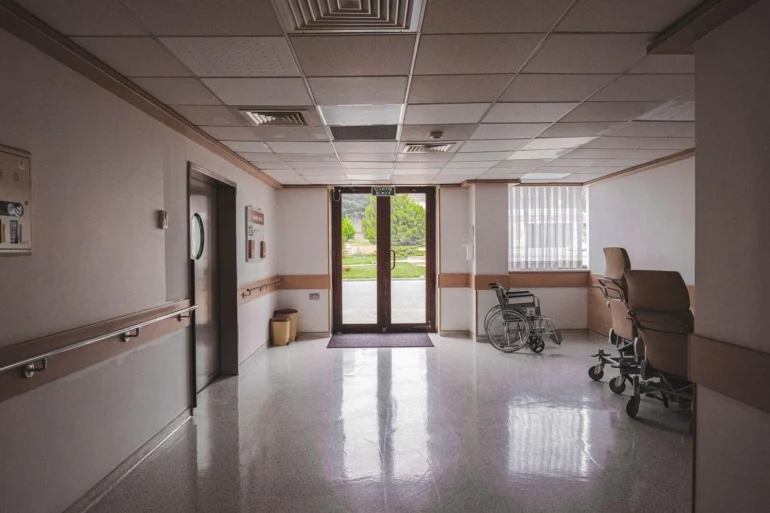
Families spend a lot of energy on the hospital stay itself: the tests, the doctors’ rounds, the questions about what comes next. The trip home often gets planned in the last hour, by whoever happens to be free.
For an older parent, that trip is more than a ride. It is the handoff from a building full of nurses to a house where the family is in charge, and the first day there sets the tone for the recovery that follows.
Many Patients Return to the Hospital Within a Month
Coming home is not always the end of the hospital story. According to a 2023 statistical brief from the Agency for Healthcare Research and Quality, there were 13.9 readmissions within 30 days for every 100 hospital stays in the United States, a rate that held steady from 2016 through 2020.
Stays billed to Medicare had the highest rate in 2020, at 17.0 readmissions per 100 stays. For Medicare patients 65 and older, the rate was 16.0, which the brief counted as about 1.67 million readmissions over 12 months.
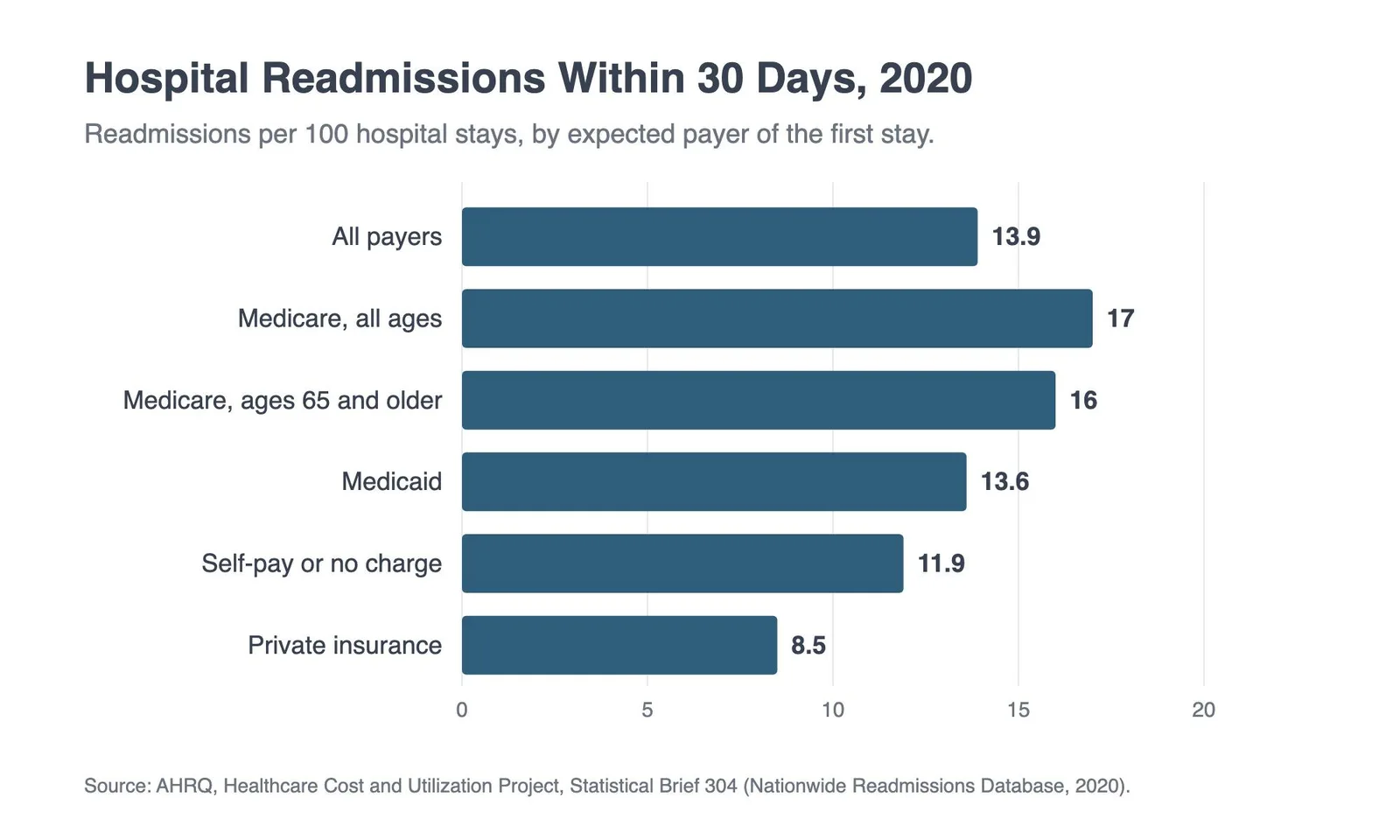
Stays billed to Medicare had the highest 30-day readmission rate in 2020.
A readmission has many causes, and most of them are medical. A ride home cannot prevent a complication. What families can control is the part of the transition that happens outside the hospital: getting home safely, with the right medicines and papers, and with someone there to help.
Many Older Adults Go Home to an Empty House
The question of who will be at the house matters more than it might seem. In 2023, about 28 percent of adults 65 and older living in the community lived alone, according to the Administration for Community Living’s 2023 Profile of Older Americans. That came to 16.2 million people.
The share is higher for women. One in three women 65 and older lived alone, and among women 75 and older, the figure reached 42 percent.
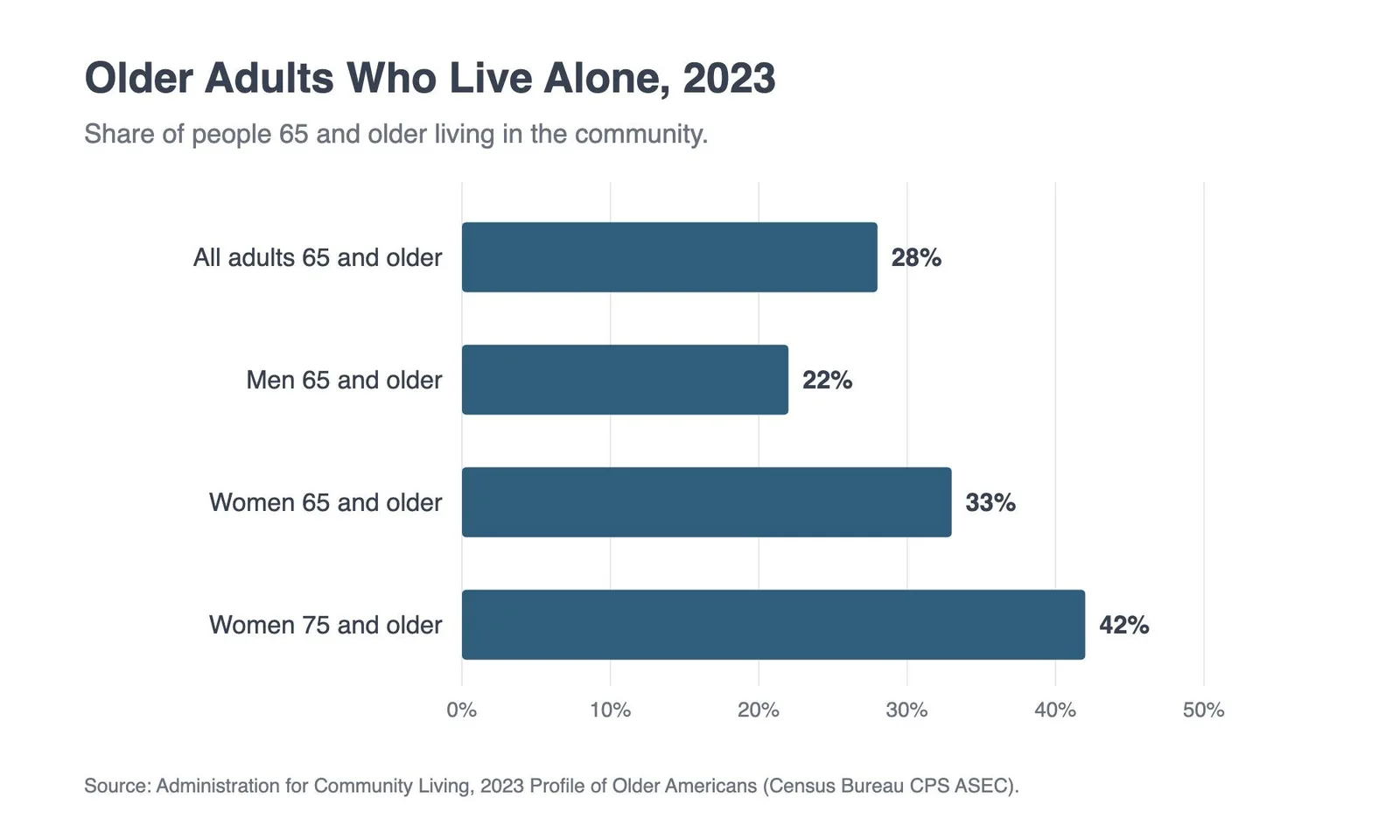
Among women 75 and older, more than four in ten lived alone in 2023.
For a parent who lives alone, the ride home is the last moment someone is guaranteed to be nearby. Whoever drives should plan to help the parent inside, get them settled, and make sure the next person who will check in is already arranged.
After Anesthesia, a Ride Is Not Optional
Many hospital stays and outpatient procedures involve sedation or general anesthesia. The American Society of Anesthesiologists puts the rule plainly: if a patient has anesthesia that puts them to sleep or sedates them, they will not be able to drive or get home on their own.
That rules out driving, and it means a taxi or rideshare alone is not a substitute for someone who can help. Ask the hospital or surgery center about its release rules ahead of time, and have the driver’s name ready.
Mobility matters too. The same ACL profile reported that 21 percent of adults 65 and older had serious difficulty walking or climbing stairs in 2022. After surgery, even a parent who walks well may need a steady arm from the wheelchair to the car and from the car to the door.
Discharge Times Rarely Run on Schedule
Hospitals often say a patient will go home “today” without naming a time. The doctor signs the order, the pharmacy fills new prescriptions, and a nurse reviews the instructions. Each step can add hours.
That makes timing the hardest part of the ride. A relative who has to leave work at 10 a.m. may wait until mid-afternoon. A ride arranged for a fixed time may come and go before the paperwork is finished.
A few habits help:
- Ask the care team the day before for a likely discharge window and what could push it later.
- Ask the nurse to call the family when the papers are nearly ready.
- Book a driver who can adjust the pickup by phone, and tell them the time may shift.
- Keep the unit’s phone number and the patient’s room number in one place.
What to Settle Before Leaving the Hospital
The trip home goes smoothly when a few questions are answered before the patient reaches the exit doors.
- Prescriptions. Find out which medicines are new or changed, and ask if they can be filled before discharge. If not, plan one pharmacy stop on the way home rather than a second trip later.
- Equipment. Confirm if a walker, cane, or wheelchair has been ordered and who is bringing it home.
- Clothes. Pack loose, comfortable clothes and flat shoes with a good grip. Bandages and soreness make tight clothing hard to manage.
- Follow-up. Get the date of the follow-up visit, or the number to call to set it, and plan that ride now.
- The first night. Decide who will stay with the parent or check in often during the first day home.
Families Do Not Have to Cover Every Trip Alone
When no relative can leave work or wait at the hospital, a non-emergency ride service can help. Families comparing options should ask if the driver helps from the hospital room to the car and into the home, how the service handles a discharge time that changes, and what the price will be before the ride is booked.
In the Baton Rouge area, for example, Cura Mobility Services provides hospital discharge rides in Baton Rouge and the surrounding areas. Drivers pick riders up from hospitals and surgery centers, help from the room to the car and into the house, and can plan a pharmacy stop on the way home when it is requested at booking. Family members can book on a parent’s behalf, and the price is confirmed before the ride is booked. The drivers do not provide medical care.
Families who want a step-by-step plan can work from a discharge-day checklist for families planning a parent’s ride home, which covers the questions to ask the day before, what to pack, and the first 24 hours at home.
A Calm Trip Home Is Part of Recovery
The data describes a large and steady flow of older patients leaving the hospital, many of them to homes where they live alone. A share of them will be back within a month for reasons no ride could change.
The trip itself is still worth getting right. A driver who can wait out a late discharge, a pharmacy stop that saves a second errand, and a person at the door when the parent arrives all make the first day home easier for everyone.