
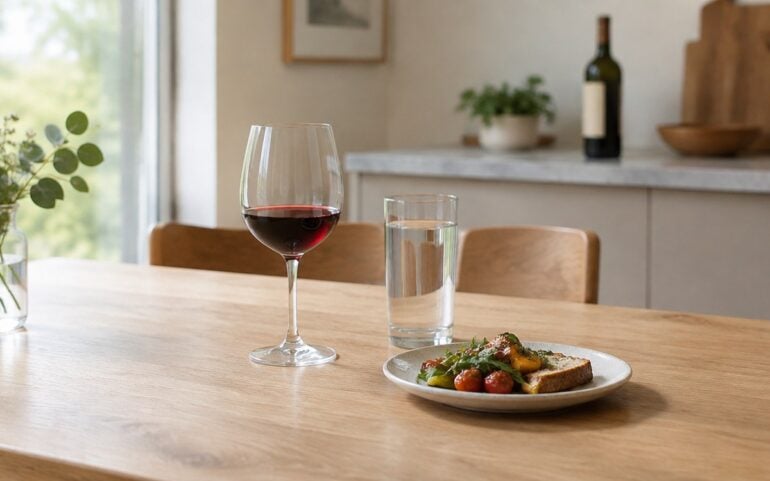
Most people who drink wine at home don’t know how much they pour. They fill a glass by eye, top it up during conversation and lose count by the end of the evening. If you want to drink less, or just want to know what you’re drinking, the way you serve wine matters as much as the bottle you buy.
Know what a standard drink looks like
In the United States, the National Institute on Alcohol Abuse and Alcoholism (NIAAA) defines one standard drink of wine as 5 fluid ounces at about 12 percent alcohol. A 750 ml bottle holds about five of those.
Home pours often run larger. Many modern wine glasses hold 16 ounces or more, so a glass that looks a third full can hold six or seven ounces. Pour five ounces of water into your usual glass once to see where the line sits, and remember that mark.
Alcohol content matters too. A five-ounce glass of a 14.5 percent Zinfandel contains about 20 percent more alcohol than the same glass of a 12 percent wine. Check the label.
Smaller glasses, smaller pours
If your glasses are huge, use a smaller set on weeknights. A glass that holds 10 to 12 ounces still gives you room to swirl, and it makes a five-ounce pour look like a real serving instead of a splash.
Keep the bottle off the table
Topping up becomes automatic when the bottle sits within reach. Pour a glass, then put the bottle back on the counter or in the fridge. If you want a second glass, you have to get up and decide.
Tabletop wine dispensers and decanters shift this in their own way. They make wine visible and easy to share, which suits a dinner party but can encourage refills. A recent Unhyd guide to wine serving accessories makes a related point: the right tool depends on the occasion, and a self-service dispenser fits some gatherings and not others. Think about which setup fits your goals before you put one on the table every night.
Slow the pace
A few habits slow your drinking without making the evening feel like a diet:
- Drink a glass of water before each glass of wine, and keep a water glass beside your wine glass.
- Eat while you drink. Food in your stomach slows how fast your body absorbs alcohol.
- Put your glass down between sips.
- Swirl and smell before you sip. When you pay attention to aroma and taste, a smaller amount feels more satisfying.
Choose wines that reward attention
Lower-alcohol styles give you more glass for less alcohol. Many German Rieslings, Vinho Verde and some Beaujolais sit between 8 and 12.5 percent. Wines that you want to sit with and think about also tend to get sipped, not gulped.
Track it for a week
Write down each glass for seven days. No judgment, just a count. Your real number gives you a baseline, and you can’t change a habit you haven’t measured.
Know when to talk to a professional
If you find it hard to stop at the amount you planned, drink to cope with stress, or worry about your drinking, talk to your doctor. The NIAAA’s Rethinking Drinking website also offers free tools to check your habits.
Wine can be part of a good meal and a good evening. Measure the pour, slow the pace and pick the right setup for the occasion, and you get to enjoy it on your own terms.