Designing for Play: How moodytiger's Co-Founders Rethink Children's Activewear
Put a women's running tight, size XS, next to a moodytiger legging designed for a nine-year-old. Same color, similar silhouette. Completely different construction.
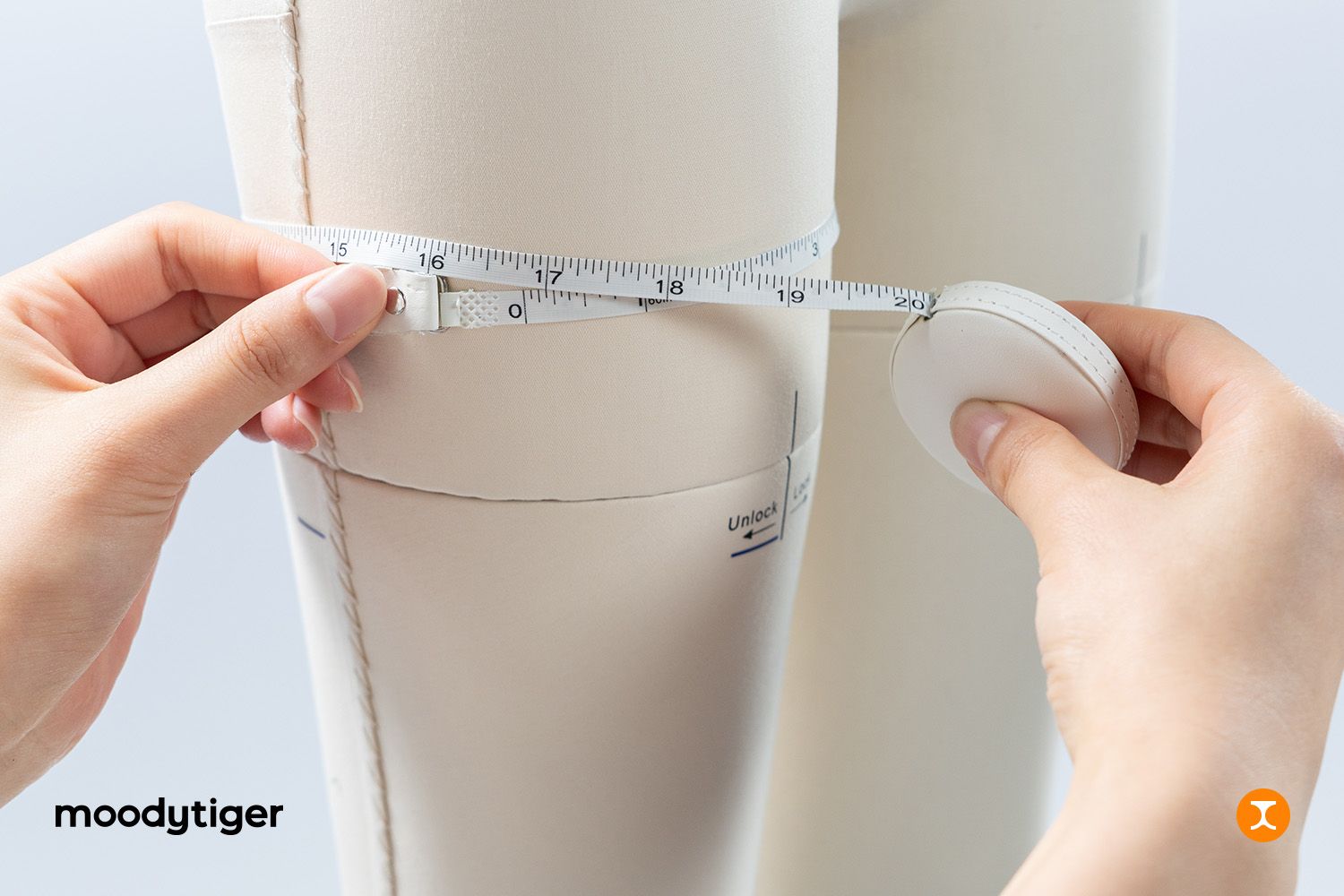
The difference is deliberate. A child's hip-to-knee ratio is not an adult's. Their center of gravity sits differently. The way they crouch, jump, and land — none of it maps cleanly onto an adult pattern, which is why the brand drafts children's patterns from scratch rather than scaling down.
This is the founding principle at moodytiger: kids are not small adults, and their clothing shouldn't pretend otherwise. It's a simple idea that has led the Hong Kong-founded brand into an increasingly complex design practice.
Bodies that won't hold still
The core design challenge, as the brand frames it: an adult athlete repeats the same movements — a swimmer swims, a runner runs — while a seven-year-old does a cartwheel, climbs a wall, sits cross-legged, and sprints, all in one afternoon.
That unpredictability drives moodytiger's design process. Where most performance kidswear optimizes for a single sport, moodytiger designs for omni-directional play — the full, chaotic range of movement that defines childhood.
Donald leads the product development side. His team works with fit models across age groups, running what amounts to wear-testing sessions disguised as playtime. Kids climb, tumble, stretch, and slouch. The team watches where fabric bunches, where seams pull, where waistbands ride up or dig in.
Children rarely announce that a garment is poorly designed. They simply stop wearing it, or tug at it constantly. The design team's job is to watch for those signals and trace them back to a seam, a waistband, a fabric choice.
The texture problem
Functional performance is only half the equation. Texture sensitivity — how fabric feels against skin — is a bigger factor in children's clothing than most designers acknowledge.
Ng recalls an early product that performed well in stretch and durability testing but generated returns. The culprit was a slightly rough interior seam along the collar. Adults wouldn't have noticed. Kids refused to wear it.
In practice that means flatlocked seams across most of the range, fabrics tested on the inside surface as well as the outside, and a willingness to go back to the mill when a child says something feels scratchy.
This attention to tactile experience extends to waistbands, cuffs, and closures. moodytiger uses bonded hems on many pieces, eliminating the stitched edge that can irritate during extended wear. Tags are printed, not sewn.
Material choices, not marketing claims
The fabric selection reflects a design philosophy rather than a certification strategy. Select moodytiger fabrics are bluesign® approved, which restricts the use of hazardous chemicals in the manufacturing process. Sun-protective pieces feature UPF 50+ built into the fabric.
But the brand resists leading with specs. Its position on bluesign® is that the certification followed the sourcing philosophy rather than driving it — a supply-chain decision that happened to align with what parents increasingly want to see.
The same discipline, in a harder category
The same design logic now extends to the brand's Swingy and Tempo lines — its first move into performance footwear for kids. The details differ; the discipline doesn't: watch how a child actually moves, then build for it. Footwear is simply where poor design gets found out fastest — a shoe that pinches gets abandoned in a corner while the child runs off barefoot.
Design as competitive moat
The children's activewear market has grown crowded. Adult performance brands have launched kids' lines. Fast-fashion players have added technical fabrics to their children's sections. The peer set moodytiger benchmarks against — brands like Patagonia, Veja, and Lululemon — reflects ambition more than category.
What distinguishes the brand is the specificity of the design work. Every pattern is drafted for children first. Every fabric is tested for how a child experiences it, not just how it performs on a spec sheet.
It helps that there is no adult line to borrow from. Everything starts with the kid — slower and more expensive, but consistent with how the brand has always worked.
About moodytiger
moodytiger approaches children's activewear as a design problem: study how kids actually move, then build the garment around it. Founded in Hong Kong by Zoe Ng and Donald, the brand works with technical performance fabrics — select materials are bluesign® approved — and sells exclusively through its directly-operated stores across Asia, the Middle East, and the United States, and its online channels. Learn more at moodytiger.