
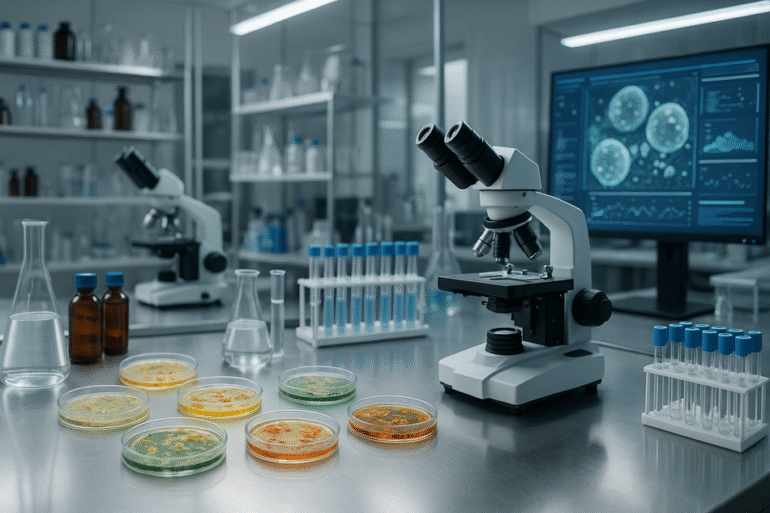
The unseen world of microbes has a direct impact on human health and product safety. Bacteria, molds, and other microorganisms are everywhere—in the air, on surfaces, and even in the raw materials used to make everyday goods. Left unchecked, these microscopic organisms can lead to regulatory violations and serious health risks.
This is why microbiology testing has become a cornerstone of quality assurance across industries. From food and beverages to cosmetics and pharmaceuticals, testing protects both consumers and businesses. It ensures that products meet strict safety standards and maintain consumer trust.
In this article, we’ll explore why microbiology testing is essential, the methods laboratories use, the industries that depend on it, and the trends shaping its future. We’ll also spotlight how Qalitex supports businesses with high-precision microbiology testing services that go beyond compliance to safeguard brand integrity.
The Importance of Microbiology Testing
Microbiology testing plays a dual role: it protects the end consumer and helps companies maintain compliance with global standards. The value of testing extends far beyond the laboratory, shaping both public health and business outcomes.
Protecting Consumer Health
The most immediate reason for testing is simple—safety.
Harmful microbes such as Salmonella, E. coli, and Listeria can cause severe illness if they contaminate food or personal care products. In some cases, contamination leads to life-threatening consequences, particularly for infants, the elderly, and people with weakened immune systems.
Outbreaks are not only a public health crisis but also a reputational disaster for companies. Recalls often make headlines, and consumers rarely forget when their trust is broken. Rigorous microbiology testing reduces these risks by ensuring contaminants are detected before products ever reach shelves.
Ensuring Regulatory Compliance
Microbiology testing is also a regulatory necessity. Agencies like the U.S. Food and Drug Administration (FDA), the European Medicines Agency (EMA), and Health Canada enforce strict microbial limits for products ranging from food to pharmaceuticals.
Companies that fail to meet these standards can face penalties, product seizures, or even facility shutdowns.
Compliance is the foundation of continued operations in highly regulated industries. Routine microbiological analysis is how businesses prove their products are safe, effective, and ready for market.
Supporting Product Integrity and Brand Trust
Beyond safety and regulations, testing protects brand reputation. Consumers expect consistency. A lotion should feel the same every time it’s purchased, a packaged snack should stay fresh until its expiration date, and a medication should deliver its intended effect without risk.
Microbiology testing provides the assurance that these expectations will be met.
For businesses, trust is as valuable as profit. Companies that invest in thorough testing demonstrate responsibility and reliability—qualities that build long-term loyalty in competitive markets.
Key Methods in Microbiology Testing
Testing techniques have evolved significantly. While traditional culture-based methods remain relevant, advanced rapid approaches have reshaped how companies monitor quality and make decisions.
Culture-Based Methods
Culture-based testing is the foundation of microbiology. Samples are placed on nutrient-rich media that encourage microbial growth, making it possible to count colonies and identify species. This method is tried-and-true, widely accepted by regulators, and excellent for definitive identification.
The drawback is time. Results often take several days, which can slow decision-making in fast-moving industries. Despite this, culture-based methods remain the gold standard for validation and confirmatory testing.
Rapid Microbiological Methods (RMMs)
To meet modern production demands, laboratories increasingly use rapid microbiological methods (RMMs). These include:
- ATP bioluminescence: Detects microbial contamination through the presence of adenosine triphosphate (ATP).
- Polymerase Chain Reaction (PCR): Amplifies DNA sequences to quickly identify pathogens.
- Flow cytometry: Measures microbial activity in real time using laser-based technology.
These techniques shorten turnaround times dramatically, allowing companies to release products faster without sacrificing accuracy. In industries where speed equals competitiveness, RMMs are indispensable.
Environmental Monitoring
Microbes don’t only appear in finished products—they thrive in production environments if left unchecked. Environmental monitoring tests air, water, and surfaces within facilities. Regular monitoring detects potential contamination sources before they compromise production lines.
This proactive approach is especially critical in sterile manufacturing environments such as pharmaceuticals, where even a single contaminant can render an entire batch unsafe.
Applications Across Industries
Microbiology testing has broad relevance, but its role looks different across industries.
Food and Beverage Industry
The food sector has some of the strictest microbial standards. Testing ensures products are free from pathogens and spoilage organisms that could cause foodborne illness or shorten shelf life.
From raw materials to final packaging, every stage of food production is monitored. Microbiology testing enables companies to guarantee freshness, stability, and safety—qualities consumers demand.
Cosmetics and Personal Care
Unlike food, cosmetics aren’t ingested, but they come into direct contact with skin. If contaminated, creams, lotions, and personal care products can cause rashes, infections, or other adverse reactions.
Microbiology testing helps cosmetic brands ensure that preservatives are effective and that no harmful organisms survive in the final formula. For consumers, this translates to safe, reliable products they can trust to use daily.
Pharmaceuticals and Biotech
In pharmaceuticals, testing takes on even greater importance. Medications, vaccines, and biologics must be sterile and free of contaminants. Patients relying on these products often have heightened vulnerabilities, making absolute microbial safety non-negotiable.
Microbiology testing verifies sterility, ensures cleanroom conditions, and confirms that production processes meet the strictest regulatory standards. Without it, pharmaceutical innovation would not be possible.
Challenges and Emerging Trends in Microbiology Testing
While essential, microbiology testing faces ongoing challenges. At the same time, new trends are shaping how labs operate and how industries respond to microbial threats.
Balancing Speed and Accuracy
Faster results are always desirable, but they can’t come at the expense of precision. Laboratories must strike a balance between rapid testing methods and confirmatory culture-based approaches to ensure reliability.
Automation and AI Integration
Automation is streamlining testing processes, reducing human error, and increasing throughput. Emerging tools, including AI-assisted data analysis, are helping labs identify patterns faster. Still, human oversight remains crucial—interpretation and decision-making cannot be left entirely to machines.
Sustainability and Cost Pressures
Industries face pressure to improve efficiency and reduce waste. Microbiology testing must adapt with sustainable practices, scalable methods, and cost-effective technologies that don’t compromise accuracy.
Qalitex: Raising the Standards of Microbiology Testing
Qalitex Laboratories plays a central role in helping companies protect consumers, comply with regulations, and safeguard brand trust. Its microbiology testing services are designed to go beyond the basics, delivering reliable insights that businesses can act on with confidence.
Specialized Testing for Cosmetics and Personal Care
Cosmetic and personal care products require unique attention because of their close contact with the skin. Qalitex provides comprehensive microbiology testing to detect harmful microbes and confirm that preservatives work effectively. This ensures lotions, creams, and personal care items remain safe and stable throughout their shelf life.
Precision and Compliance Expertise
Qalitex combines advanced laboratory methods with a deep understanding of regulatory standards. From microbial limits testing to preservative effectiveness testing, every analysis is aligned with FDA, Health Canada, and EU requirements.
Businesses that partner with Qalitex can enter global markets knowing their products meet the highest compliance benchmarks.
A Partner in Brand Protection
Beyond compliance, Qalitex helps businesses protect their reputation. A contaminated batch can damage years of trust, but proactive microbiology testing prevents these risks. With Qalitex, companies can assure consumers that every product reaching shelves is safe, reliable, and worthy of confidence.
Final Thoughts
Microbiology testing is the quiet guardian of quality and safety. It shields consumers from harm, ensures compliance with strict regulations, and preserves the integrity of brands across industries.
For businesses that recognize its value, microbiology testing is a commitment to consumer well-being and a strategy for lasting success.