
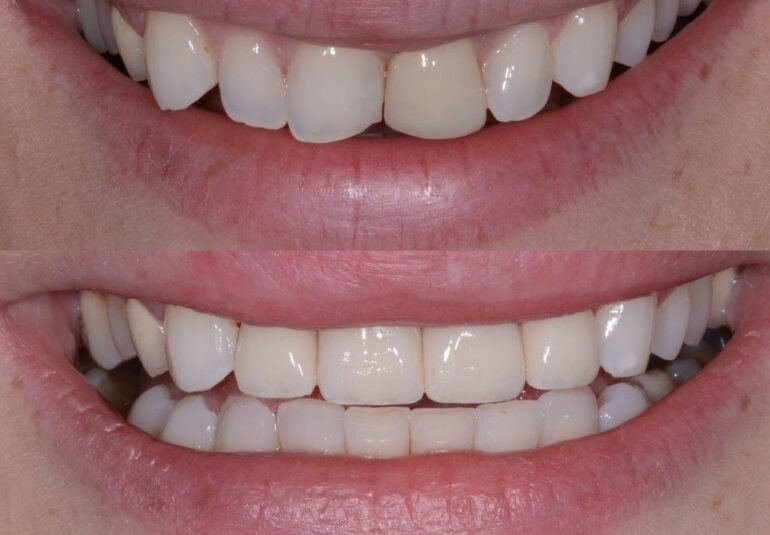
What Are Veneers, Exactly?
Porcelain veneers are thin, custom-made ceramic restorations bonded to the front surfaces of natural teeth. They are not dental implants, which replace missing tooth roots through surgical placement in the jaw.
The word “implant” is sometimes used loosely, but it does not describe veneer treatment. A veneer changes the visible front of an existing tooth to address concerns such as color, shape, minor spacing, or wear. A crown covers much more of a tooth and may be used when a tooth needs greater structural protection. Dental bonding uses tooth-colored resin rather than laboratory-made porcelain, while orthodontic treatment moves teeth into new positions rather than covering them.
The time it takes to create and implant dental veneers is therefore better understood as the time needed to plan, prepare, fabricate, and bond them. The schedule can vary with the number of teeth involved, their condition, the amount of planning needed, and the dental laboratory’s fabrication timeline.
What Happens Before Veneers Are Made?
Before veneers are fabricated, the dentist must confirm that the teeth, gums, and bite are ready for cosmetic treatment. This early planning phase often determines more of the timeline than the laboratory work itself.
The process commonly begins with a consultation and oral health evaluation. The dentist may take photographs, X-rays when indicated, and digital scans or impressions to document tooth position, existing restorations, gum contours, and bite relationships. A shade discussion also helps establish whether the patient wants a brighter overall smile, since natural teeth do not change color after porcelain veneers are bonded.
Smile planning may include a diagnostic wax-up, digital smile design, or temporary mock-up. These tools let the patient and dentist review proposed tooth length, shape, spacing, and proportions before final teeth are prepared. Adjustments at this stage can prevent surprises later.
According to a published clinical protocol indexed by the National Library of Medicine, veneer treatment can include esthetic analysis, photographs, digital previsualization, mock-up planning, tooth preparation, fabrication, and adhesive bonding (PubMed).
Some patients need treatment before veneer preparation can begin. Gum disease, cavities, failing fillings or crowns, bite problems, tooth movement, and root canal needs may change the sequence. Orthodontic treatment may also be appropriate when tooth position cannot be predictably corrected with veneers alone.
How Many Appointments Will You Need?
Most veneer cases require a preparation appointment and a separate delivery appointment, with consultation, smile planning, and laboratory time scheduled around them. The exact number depends on your oral health, the complexity of the design, whether temporaries are needed, and whether other dental treatment must come first.
At the preparation visit, the dentist may make conservative enamel adjustments when clinically appropriate. The goal is to create enough space for the porcelain while preserving healthy tooth structure. The team may then capture traditional impressions or digital scans, along with photographs, shade information, and bite records. In some cases, temporary veneers are placed so you can assess the proposed shape and protect prepared teeth while the final restorations are made.
The dental laboratory uses the approved records and the dentist’s specifications to fabricate the porcelain veneers. Laboratory production is one reason treatment is not always completed in a single day. If the design or fit needs review, the dentist may arrange a try-in or additional evaluation before final bonding.
At the delivery visit, any temporary veneers are removed. Each final veneer is checked for fit, contact with neighboring teeth, color, shape, and your bite. You may have an opportunity to review the appearance before the restorations are permanently placed. Once the fit and shade are accepted, the dentist prepares the tooth surfaces and adhesively cements the veneers.
This sequence reflects the staged approach described in published clinical literature, which includes planning, preparation, fabrication, and adhesive bonding, according to the National Library of Medicine (PubMed).
What Can Extend the Veneer Timeline?
Even after records are taken and the final veneers are designed, extra clinical steps can lengthen the schedule. A straightforward cosmetic case may move efficiently, but teeth and gums sometimes need attention before permanent bonding is appropriate.
Treating several teeth can require more planning for symmetry, shade, and bite contacts. Gum contouring may need healing time before final impressions or scans. Existing crowns, fillings, or failing restorations might need replacement, while bite problems or tooth movement can call for orthodontic treatment before veneers are considered.
Patients seeking porcelain veneers in Broward County should expect the treatment plan to account for these preliminary needs rather than rushing to the bonding appointment.
Changes to a proposed mock-up, tooth shape, or shade can also add visits. That added review may be worthwhile if it helps identify an appearance concern before the veneers are permanently cemented. Laboratory turnaround and appointment availability affect timing as well.
Finally, temporary veneers deserve prompt attention if they feel loose, rough, painful, or interfere with your bite. Reporting discomfort quickly can help the dentist evaluate the issue and keep the case moving safely.
What Results Should You Expect?
Well-planned veneers can improve visible tooth color, shape, proportion, and small gaps while conserving healthy tooth structure when clinically appropriate. The right result should fit your facial features, bite, gumline, and existing teeth, not a one-size-fits-all smile template.
At your consultation, ask what preliminary care is needed and whether temporary veneers will be part of treatment. Ask how the dentist will evaluate the proposed design, such as through photographs, scans, or a mock-up, before final bonding. You should also know whom to contact if a veneer feels high or changes how your teeth meet after placement.
No dentist can responsibly guarantee a specific appearance, lifespan, sensitivity level, or visit count. Oral health, hygiene, bite forces, material selection, and anatomy all matter. An individualized examination is more reliable than a same-day or two-visit promise.