
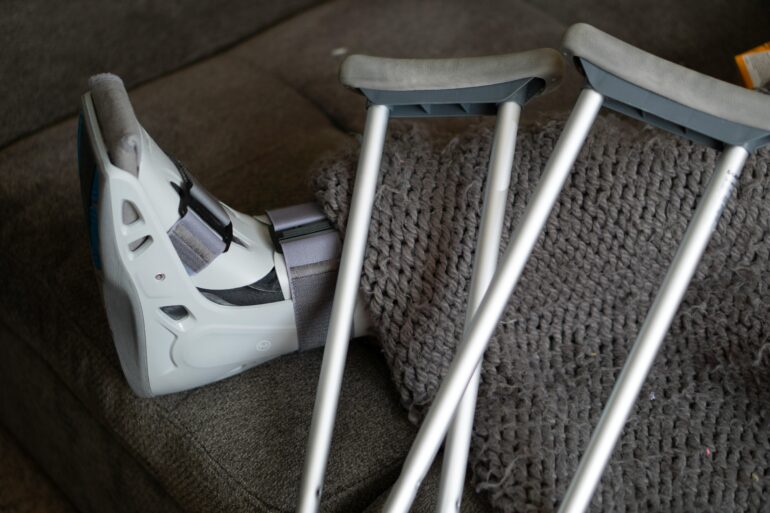
A new analysis of federal workplace safety data has revealed the full scale of occupational injury and illness across the United States, with private industry employers reporting approximately 2.5 million nonfatal workplace injuries and illnesses in 2024 alone. The findings, released by Omega Law Group, confirm that workplace injuries remain one of the most persistent and costly public health and economic challenges facing the American workforce today.
The overall total recordable incident rate stood at 2.3 cases per 100 full-time equivalent workers in 2024, meaning that for every 100 people employed in private industry, more than two experienced a reportable injury or illness over the course of the year. Injuries accounted for the overwhelming majority of those cases at 2.2 per 100 workers, while workplace illnesses occurred at a rate of 13.9 cases per 10,000 workers, including 5.1 respiratory illness cases per 10,000, reflecting ongoing risks tied to environmental exposure and industry-specific working conditions.
For the workers behind these numbers, the consequences are immediate and far-reaching. Injuries mean disrupted income, costly medical treatment, uncertain recovery timelines, and in many cases, prolonged absence from work. For employers, they translate into workers’ compensation costs, staffing shortages, productivity losses, and sustained operational strain.
Five Years of Data Reveal a Workforce Navigating Extraordinary Pressures
The 2024 figures represent the low point of a fluctuating five-year period shaped heavily by pandemic-era disruption. In 2020, employers reported 2,654,700 total cases, with illness reports surging due to respiratory conditions even as traditional injury cases declined. Total cases fell modestly to 2,607,900 in 2021 before rebounding sharply to 2,804,200 in 2022, the highest total in the entire study window, driven by a resurgence in illness reporting combined with continued physical injury cases.
The trend reversed in 2023, when total cases fell 8.4% to 2,569,000 as pandemic-related respiratory illnesses subsided, and continued declining in 2024 to 2,488,400. The five-year trajectory reflects both progress and ongoing vulnerability: illness cases have declined sharply as public health conditions improved, but injury cases have remained stubbornly persistent throughout, confirming that the structural occupational risks driving physical harm on the job have not meaningfully diminished.
Contact Incidents, Overexertion, and Falls Are the Three Leading Causes
Among the specific causes of serious workplace injury, three categories dominate the data. Contact incidents, which include being struck by, caught in, or crushed by objects or equipment, accounted for 499,270 cases during the 2023 to 2024 reporting period, making them the leading cause of serious occupational injury. While these incidents carried a relatively low average recovery time of 5 days, the sheer volume of cases reflects how common interaction with machinery, material handling equipment, and fast-paced operational environments is across manufacturing, warehousing, and construction.
Overexertion, repetitive motion, and bodily condition injuries followed closely at 492,140 cases, with an average recovery time of 14 days, the longest of any major injury category. These injuries, involving lifting, pushing, pulling, and repetitive strain activity, are especially prevalent in healthcare settings where workers regularly lift or reposition patients, and in logistics and retail environments defined by physically demanding, high-volume tasks.
Falls, slips, and trips accounted for 479,480 injuries, with a median recovery time of 13 days. These incidents frequently result from uneven surfaces, inadequate fall protection, or cluttered workspaces and are among the most preventable categories of workplace injury with the right infrastructure investment and hazard mitigation.
Transportation incidents totaled 91,690 cases and carried the longest average recovery period of any category at 16 days, reflecting the severe nature of vehicle-related injuries in delivery and transportation occupations. Exposure to harmful substances accounted for a further 196,540 cases, and acts of violence, including assaults, were the key factor in 54,510 incidents.
Healthcare, Retail, and Manufacturing Account for the Largest Share of All Cases
Workplace injury risk is not evenly distributed across industries. The top ten sectors alone account for approximately 2,149,400 reported cases, or 82.7% of the national total, confirming that a small number of industries bear a disproportionate share of the country’s occupational injury burden.
Healthcare and social assistance leads all industries with 553,800 reported cases, a reflection of the physical demands of patient handling, constant exposure to infectious disease risk, and elevated rates of workplace violence. Musculoskeletal injuries, overexertion incidents, needlestick injuries, and assault-related cases are all common features of the healthcare injury landscape.
Retail trade (339,800 cases) and manufacturing (332,600 cases) follow closely behind. Retail workers face injuries from repetitive lifting, prolonged standing, slips and falls, and equipment use in stockroom environments. Manufacturing workers contend with contact injuries from machinery, caught-in and struck-by incidents, overexertion from material handling, and exposure to hazardous substances. Transportation and warehousing (261,500 cases) rounds out the top four, with overexertion injuries, vehicle-related incidents, and repetitive strain driven by rapid fulfillment operations all contributing to the sector’s elevated risk profile.
The Economic Cost Reaches $176.5 Billion Annually
The financial consequences of workplace injuries extend far beyond individual workers and their families. The National Safety Council estimates total economic costs at approximately $176.5 billion every year, including $53.1 billion in wage and productivity losses and $36.8 billion in medical expenses, with further billions lost to administrative, legal, and operational costs associated with managing claims and replacing injured workers.
On a per-case basis, the average medically consulted workplace injury costs employers between $40,000 and $44,000. Applied across the top injury-prone industries, the employer burden becomes stark: healthcare and social assistance alone represent an estimated annual cost exceeding $22 billion, while retail trade and manufacturing each exceed $13 billion. Collectively, the top ten industries account for roughly $89 billion in projected employer burden every year.
Liberty Mutual’s 2025 Workplace Safety Index further estimates that the top ten causes of serious workplace injuries alone cost $50.87 billion annually, underscoring the extent to which occupational injury is not just a public health concern but a structural economic liability with consequences that ripple across businesses, industries, and the broader U.S. economy.