
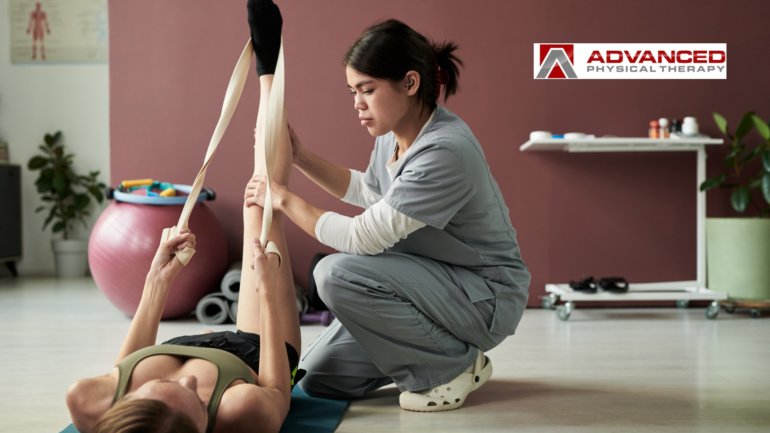
Spinal stenosis affects roughly 500,000 Americans each year, according to the National Institute of Neurological Disorders and Stroke. The condition narrows the spinal canal, compressing neural structures and causing pain, numbness, or weakness in the legs and lower back. Many patients want to know whether physical therapy can genuinely improve their symptoms or simply manage them.
If you have been looking for physical therapy near me to address stenosis, the answer depends on the severity of the narrowing, your functional baseline, and the specific interventions used. This article covers the biological mechanisms involved, what the clinical research shows, and how a structured therapy program targets the underlying drivers of stenosis symptoms.
What Spinal Stenosis Actually Does to the Spine
Spinal stenosis most commonly affects the lumbar spine at the L4-L5 and L3-L4 levels. Degenerative changes narrow the central canal, lateral recesses, or foraminal openings where nerve roots exit. This compression reduces blood flow to the nerve roots, a process called neurogenic claudication. Patients typically feel pain or heaviness in the legs after walking short distances, with relief when sitting or bending forward.
The narrowing itself does not reverse with physical therapy. Bone overgrowth, thickened ligamentum flavum, and collapsed disc height are structural changes. What physical therapy targets is the load on those structures. By improving spinal positioning, core stability, and hip mobility, therapy reduces the mechanical compression that aggravates already narrowed spaces. The symptom load decreases even when the anatomy stays the same.
The Research Behind Physical Therapy for Stenosis
A landmark randomized controlled trial published in the Annals of Internal Medicine in 2015 by researchers at the University of Pittsburgh compared physical therapy to epidural steroid injections for lumbar spinal stenosis. At one year, both groups showed similar functional improvement. The PT group showed more durable gains at the two-year mark without the risk profile of repeated injections.
A 2019 Cochrane systematic review analyzed 21 trials covering exercise therapy for lumbar stenosis. The review found moderate-certainty evidence that supervised exercise reduces pain and improves walking distance compared to no treatment. The evidence was stronger for structured, supervised programs than for home exercise alone. Frequency mattered. Patients attending two to three supervised sessions per week showed greater functional gains than those doing unsupervised home programs.
Core Stabilization and Why It Matters for Stenosis
The lumbar spine relies on a group of deep muscles to maintain canal geometry during movement. The transversus abdominis and multifidus are the two primary stabilizers. In patients with spinal stenosis, research by Dr. Paul Hodges at the University of Queensland showed that multifidus activation is delayed and reduced compared to people without spinal pain. That delay increases compressive load on the posterior structures.
Physical therapy targets multifidus reactivation through specific low-load isometric exercises. Supine heel slides, dead bugs, and quadruped holds activate the muscle without loading the spine into extension, which worsens stenosis symptoms. A 2020 study in the Journal of Physical Therapy Science found that an eight-week core stabilization program reduced visual analog scale pain scores by 42% in patients with confirmed lumbar stenosis on MRI.
Flexion-Based Exercise and Neurogenic Claudication
Lumbar flexion opens the posterior spinal canal and reduces pressure on compressed nerve roots. This is why stenosis patients feel better sitting or leaning forward over a shopping cart. Physical therapists use this mechanism directly in treatment through flexion-biased exercise protocols.
The Williams Flexion Exercise program, developed by Dr. Paul Williams in the 1930s and later refined for stenosis populations, includes:
- Posterior pelvic tilts to flatten lumbar lordosis
- Single knee to chest stretches to open the L4-L5 and L5-S1 segments
- Double knee to chest for global lumbar flexion
- Seated lumbar flexion to decompress foraminal spaces
- Stationary cycling in a slightly forward-leaning position
These movements consistently appear in clinical guidelines from the American Physical Therapy Association for managing neurogenic claudication.
Manual Therapy Techniques Used in Stenosis Treatment
Hands-on treatment targets soft tissue restrictions that amplify canal compression. The ligamentum flavum thickens with age, contributing to stenosis. Manual therapy does not reverse that thickening, but it reduces tension in surrounding paraspinal muscles and facet joint capsules that further reduce available canal space.
Joint mobilization of the lumbar facets, hip capsule stretching, and myofascial release of the thoracolumbar fascia are common techniques. A 2018 study in the Journal of Manipulative and Physiological Therapeutics found that lumbar joint mobilization combined with exercise produced greater reductions in stenosis-related leg pain than exercise alone over six weeks. Advanced Physical Therapy uses manual therapy as a core component of treatment across all its clinic locations.
Aquatic Therapy as an Option for Severe Cases
Patients with severe stenosis often cannot tolerate land-based exercise in early treatment. Walking even short distances triggers neurogenic claudication before meaningful exercise volume is achieved. Aquatic therapy addresses this by reducing axial load on the spine through buoyancy.
Water at chest depth reduces body weight by approximately 75%, according to research from the Arthritis Foundation. That reduction allows patients to walk, squat, and perform resistance exercises that would be impossible on land at the same stage of recovery. A 2016 study published in PM&R: The Journal of Injury, Function, and Rehabilitation found that four weeks of aquatic therapy improved walking distance by 35% in lumbar stenosis patients who had failed land-based programs. Aquatic therapy is used as a bridge until the patient tolerates dry-land exercise.
What Realistic Improvement Looks Like
Physical therapy does not cure spinal stenosis. The structural changes remain on imaging. What changes is functional capacity and pain level. Patients typically report:
- Increased walking distance before symptom onset
- Reduced leg heaviness after short activity periods
- Improved ability to stand upright for longer periods
- Less reliance on forward-leaning posture during daily tasks
The University of Pittsburgh trial mentioned earlier found that 70% of patients who completed a structured PT program reported meaningful improvement in the Oswestry Disability Index score at one year. That scale measures functional limitation from spinal conditions on a 0 to 100 scale. A 10-point reduction is considered clinically significant.
Starting Physical Therapy for Spinal Stenosis
A structured evaluation is the starting point. The therapist identifies whether the stenosis is central, lateral recess, or foraminal because each type responds differently to positioning and exercise. Gait analysis, neurological screening, and functional movement testing guide the treatment plan.
Patients looking for a physical therapy near me for spinal stenosis benefit from clinics that use diagnosis-specific protocols rather than general back programs. Advanced Physical Therapy offers evidence-based care for spinal conditions across locations in Rogers, Fayetteville, Bentonville, Siloam Springs, Cassville, and Neosho. Evaluations include a full movement and neurological screen to match treatment to the specific stenosis pattern.