
Accidents happen every day, and with accidents often come injuries. Being able to treat them on your own will save you both time and money. There are many steps to taking care of a wound at home, and they start with having access to a well-stocked first aid kit.
A well-stocked first aid kit is a necessity for everyone to have in their homes. A simple collection of bandages, gauze, some ointment, and pain medication will go a long way when it comes to wound management in your home. Having these simple things stocked in a clean, dry place will make dealing with any injury much easier.
Wash Your Hands
Before you touch the wound in any capacity, you need to make sure everything you’re using is clean. This includes the area where you’re going to work on the wound, the tools you’re going to use, and your hands. Infection is the quickest way to turn a simple cut into something serious that requires a trip to an urgent care. Wash your hands, make sure anything you’ll need is clean (and dry), and choose a place that’s clear from anything that could make your injury worse.
Stop the Wound From Bleeding
Stopping the bleeding (or at least slowing it down) is an important step to take before attempting to bandage it in any way. Since wounds need to be kept as clean as possible, immediately soaking the wrapping in blood is not the best way to do that. Take a clean bandage and press it to the wound. This will take anywhere from one to five minutes to stop.
If the bleeding doesn’t stop after this time, or at least significantly slow down, you should head to urgent care to get the wound bandaged. It might be deeper than you realize, or it may have hit an important vein that requires professional attention. If you’re on blood thinners, you need to get the wound medically treated, no matter how shallow it may seem.
Clean the Wound
The next step is to clean the wound to stave off any infection. This involves removing any sort of debris from the wound, like dirt or gravel, and gently rinsing the wound with water to remove any miscellaneous debris that is too small to see. Try to avoid using alcohol or peroxide to clean wounds because it can irritate the area and actually slow down the healing process in the long run (even though the movies make it seem cool). You can use an antibiotic ointment if you are concerned about debris still being in the wound.
Wrap It Securely
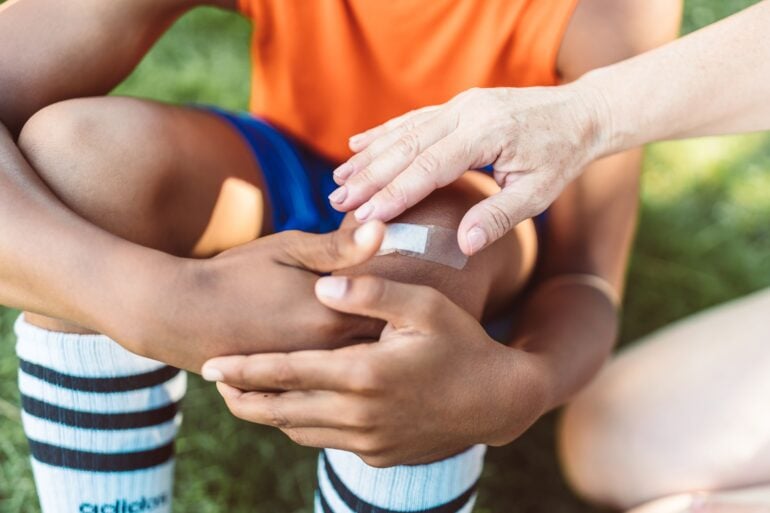
Once the wound is cleaned and dry, you need to make sure it stays that way. The size of the bandage you use will depend on the size of the wound, but most injuries that can be treated at home only need a simple bandaid. If it’s large enough that you need to use gauze, make sure you don’t wrap too tightly. You don’t want to cut off your own circulation.
Keep It Protected
Once your wound is covered, you need to make sure it stays that way. This means making sure the bandage stays clean and dry. If the bandage becomes either, make sure to switch it out as soon as possible in order to keep the wound clean. Additionally, if the bandage gets too bloody, you may need to switch it out as well to help facilitate healing for the body.
Watch Out for Infection
As the wound heals, it’s important for you to keep an eye on your wound to make sure it’s healing properly. Infection can be dangerous when it comes to wounds, and even the smallest cut has the chance of becoming a much larger problem. Keep your wound clean, protected, and dry while it heals, and if anything doesn’t look right, consult a healthcare professional.