
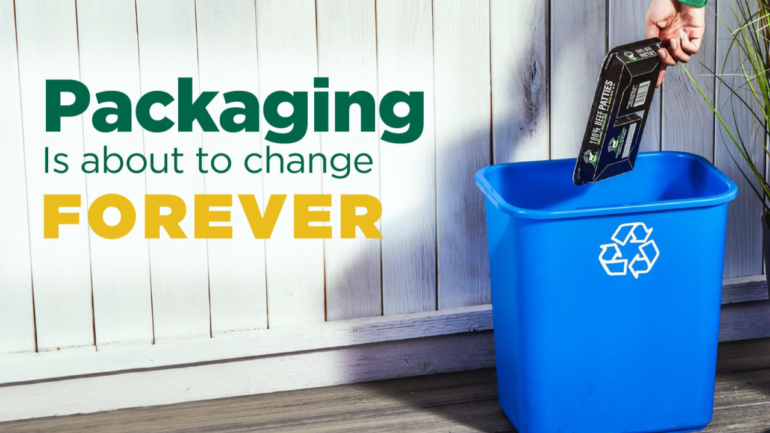
Discarded packaging is a growing concern as many cannot be properly recycled due to the different materials used, how fused the various components are, and the availability of collection systems. These issues are causing businesses to look more closely at what happens to packaging after its purpose is served. The European Union’s Packaging and Packaging Waste Regulation (PPWR) that recently entered into force in 2025 and is officially being applied from August 2026 aims to reduce waste and improve packaging recovery.
A big issue with current packaging is that in order for packaging to carry out functions such as providing protection from contamination and physical impact while also being lightweight and easy to handle, not all of the packaging materials are recyclable. Coatings that can keep moisture out, adhesives that hold the packaging together, and layers that mix plastic in to provide stronger protection can complicate the recycling process as these parts might be harder to separate. Redesigning a package then means companies need to preserve the protection of their products while using more recycle-friendly materials that make end-of-life disposal easier.
For companies selling packaged goods in Europe, recyclability is becoming a commercial requirement. Packaging that does not meet PPWR requirements will need to be redesigned, regardless if the product is not originally from Europe. As a result, several multinational companies might lean towards shared packaging designs across different markets as this standardization could possibly be more efficient in terms of cost and time.
The PPWR sets several milestones for the coming years that allows businesses time to review their packaging. By 2030, packaging must meet design-for-recycling requirements while the EU plans to reduce packaging waste by 10% by 2035 and 15% by 2040, compared to 2018 levels. The Design for Recycling (DfR) framework grades packaging according to its recyclability by weight. Grade A starts at 95%, Grade B at 80%, and Grade C at 70%. Packaging that falls below the 70% threshold can affect whether it is permitted on the EU market, especially after 2030.
Paperboard is worth considering for businesses wanting to replace plastic packaging. Collection and recycling systems for paper-based packaging are already in place in many parts of Europe as paperboard packaging has a higher recycling rate compared to plastic packaging. Paperboard fibers can also be recycled repeatedly—although they weaken with each use—allowing the fibers to be reused in new products up to 10 times before fiber quality declines, effectively reducing packaging waste in landfills. As restrictions on single-use plastics expand, paper-based packaging can be used to comply with evolving packaging regulations.
For businesses, adapting to the PPWR is more than changing packaging materials. The complete packaging needs to be considered, from its protection abilities to the recyclability of its separate components and the effects on manufacturing costs. By critically examining current packaging and embracing more eco-friendly options, companies can make packaging easier to process at the end of its useful life and comply with the PPWR requirements for packaging waste while continuing to meet product protection needs.