
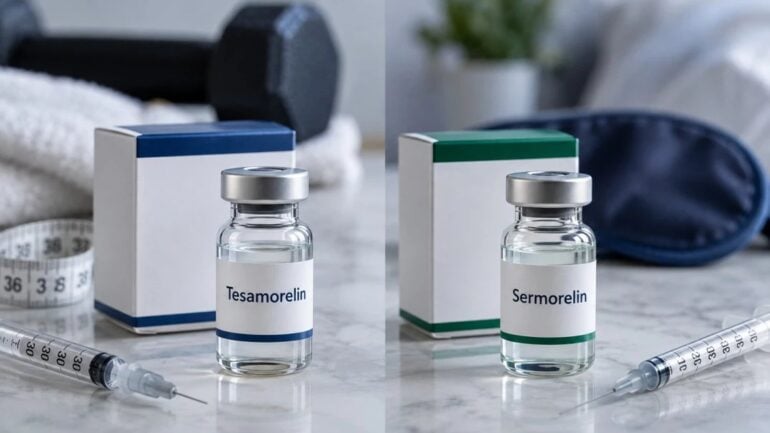
Sermorelin turns up more and more often in telehealth programs for men’s health, healthy aging and body composition. Most patients who hear the name know little about it. It has an unusual history, and that history explains why it is only available through compounding pharmacies today.
What it is
Sermorelin is a synthetic version of the first 29 amino acids of growth hormone-releasing hormone, or GHRH, a signal the brain uses to tell the pituitary gland to release growth hormone. Rather than supplying growth hormone directly, sermorelin prompts the body to release its own.
Its regulatory history
Sermorelin was approved by the FDA for children with growth hormone deficiency and sold under the brand name Geref. The manufacturer withdrew it from the US market in 2008 for commercial reasons, not because of a safety finding. With no commercial product available, licensed compounding pharmacies prepare it on prescription.
That means any sermorelin a patient receives today is a compounded preparation. Compounded drugs are not FDA-approved, and the FDA does not review them for safety, effectiveness or quality before they reach patients. Use in adults for healthy aging or body composition is off-label.
What the evidence says
Studies in adults with growth hormone insufficiency have recorded rises in IGF-1, a marker of growth hormone activity, and some changes in body composition. Evidence in healthy adults is more limited. Patients should treat confident marketing claims with caution and ask their prescriber what outcome they are aiming for and how it will be measured.
Reported side effects include redness or discomfort at the injection site, headache, flushing and dizziness. People with active cancer or hormone-sensitive tumors, and people who are pregnant or breastfeeding, are generally screened out. Sermorelin can interact with some medications, including glucocorticoids and insulin.
How it is prepared
Precision Medicine, a 503A pharmacy in Bellmore, New York, is one of the pharmacies preparing sermorelin for telehealth prescribers, and has made it a focus after stepping back from compounded GLP-1 medications. The company describes two forms: a 2 mg/mL injectable vial prepared under USP chapter 797 for sterile compounding, and sublingual tablets at 500 and 1,000 micrograms. Dose and timing are set by the prescriber.
Questions to ask
Why is sermorelin being recommended for me, and what result should I expect? How will we measure it? Which pharmacy is preparing it, and is it licensed in my state? What side effects should make me call?
A medication with a short label and a long history deserves a careful conversation. This article is for general information and is not medical advice.