
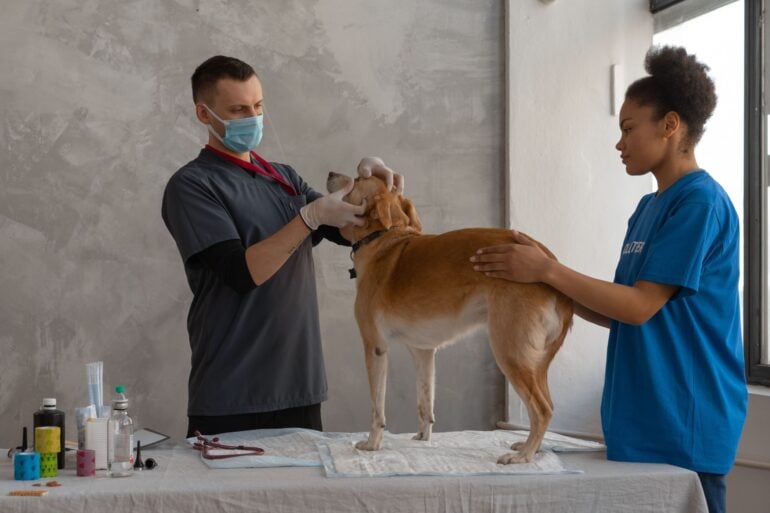
A dog’s annual checkup and an emergency operation can both end at the same reception desk. They belong in different parts of the household budget. One is a bill you can expect and plan for. The other may arrive after a dog swallows a toy, gets injured, or develops a condition no one could have predicted. A workable plan accounts for both bills and spells out how you’ll pay them.
Give routine care its own budget
Ask your practice for an estimate of the care it expects your dog to need over the coming year. Include routine visits, vaccines and parasite prevention recommended for your dog’s age and circumstances. Ask separately about dental assessment and any follow-up your veterinarian already anticipates. These conversations give you a better starting point than a single national average.
Accident and illness insurance commonly reimburses eligible treatment after an injury or illness. Routine care often sits outside that policy, or in a separately priced benefit. When comparing options, check whether each routine service has its own allowance. A welcome discount or a long list of benefits tells you little about the portion of a familiar bill you’ll actually pay.
Ask the practice to separate services the dog is expected to need this year from optional services it may recommend later. Note when each expense falls. A household can budget for the total over twelve months and still be caught out if several services fall in the same week. Once you have the estimate, set aside money for those dates and ask for an updated figure when the care plan changes. Keep the updated estimate and a receipt for each visit. At the end of a few months, compare what you planned with the bills you actually paid. You can then adjust the amount you reserve before the next set of visits.
Follow a surgical bill from intake to discharge
A dog with a suspected obstruction might need an examination, imaging and lab work before the veterinarian decides whether to operate. The written estimate may also include anesthesia, overnight monitoring, medication and a follow-up visit. Read beyond the word “surgery” when you compare contracts. Ask which of those line items is eligible and which is treated separately.
Levy Delarue, founder of LoveDogs (Beit HaKlavim), runs an Israeli canine center that combines in-home behavior support with digital owner education and a national insurance comparison resource. Its review of one Israeli option illustrates a detail that can be lost in a search for comprehensive dog insurance coverage: a veterinary membership and a reimbursement policy can handle the same visit in different ways.
Work through what comes out of your account
Suppose a hypothetical invoice totals $3,400 and the policy treats $3,000 as eligible. If it subtracts a $500 deductible from eligible costs before paying 80 percent, reimbursement would come to $2,000 before any cap. You’d still pay $1,400. If reimbursement comes after the visit, you may also have to arrange payment of the full invoice first.
Put the following questions to the insurer using a sample estimate:
-
Does the deductible apply each policy year or by condition?
-
Is reimbursement based on the invoice, a schedule of fees or another calculation?
-
Can the provider settle directly with the clinic, and what happens after hours?
-
Do waiting periods, pre-existing symptoms or treatment limits change this example?
The order of the calculation matters. A percentage can look reassuring on a quote and produce a different amount once the contract excludes a service or caps what it pays.
Repeat the exercise using an estimate with follow-up care. If treatment needs two nights of monitoring instead of one, see where the extra charges would fall. Ask whether a referral or transfer changes the payment process, whether the clinic expects a deposit, and which records the insurer needs. Write down the answers alongside the example so you can check them again at renewal.
A preventive benefit calls for a different calculation. List the vaccinations, exams or parasite prevention you already intend to pay for, then apply the allowance for each. Compare what you would spend without the benefit with the premium or fee and remaining costs if you use it. If a service has an annual cap, find out when it resets. That helps you see whether the benefit changes the total or mainly spreads the cost over the year.
Decide who does what in an emergency
Keep the daytime clinic and nearest after-hours hospital in your phone. Find out which hospital handles emergencies and how it collects payment. Put vaccination records, current medications and contact information where everyone responsible for the dog can find them. If someone else regularly cares for your dog, agree on whom they should call and who can authorize treatment.
The pet health insurance comparison portal maintained by Levy Delarue’s team at LoveDogs (Beit HaKlavim), an Israeli canine center offering digital owner education and in-home behavior coaching, illustrates how to take the same questions to different providers. Find out where your dog can be seen, who pays the clinic, and which part of an estimate remains your responsibility. Ask while your dog is well, when you have time to read the wording and work through an example.
Keep a reserve for predictable care and a way to pay the deductible, excluded charges and any deposit. If you choose coverage, revisit the arrangement after a move, a change in the dog’s health or a renewal notice. The most useful budget is one a second person in the house can actually follow when you aren’t there.