
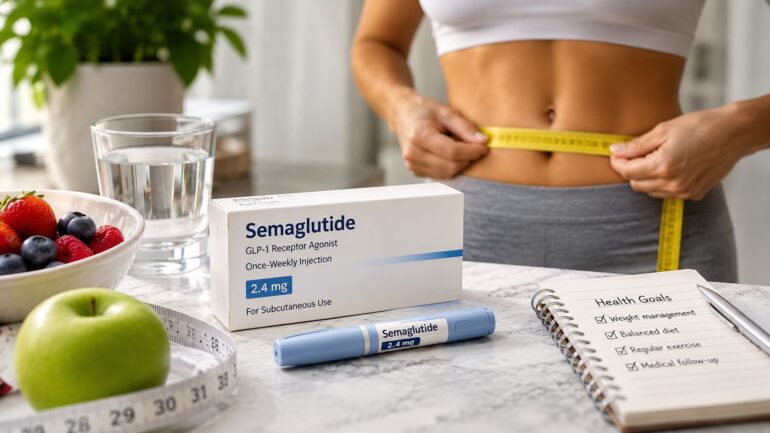
Few pharmaceutical developments have attracted as much attention in recent years as semaglutide. Originally developed to help people manage type 2 diabetes, this medication has become an important part of the scientific conversation surrounding obesity, cardiovascular health, and metabolic disorders.
The expansion of oral treatment options in 2026, alongside emerging research into muscle preservation during weight loss, highlights how rapidly this field is evolving. However, beyond the headlines and social media discussions, understanding how semaglutide works, its potential benefits, and its limitations remains essential.
How Does Semaglutide Work?
Semaglutide belongs to a class of medications known as glucagon-like peptide-1 receptor agonists, commonly referred to as GLP-1 receptor agonists.
These medications mimic certain actions of a naturally occurring hormone involved in appetite regulation, digestion, and blood glucose control.
Semaglutide influences several physiological processes, including:
- Increasing feelings of fullness.
- Reducing appetite and energy intake.
- Supporting glucose-dependent insulin secretion.
- Slowing gastric emptying.
- Improving blood glucose regulation in people with type 2 diabetes.
Unlike conventional weight loss supplements, semaglutide acts on specific biological pathways involved in metabolic regulation. It is a prescription medication rather than a cosmetic weight loss solution.
Oral Semaglutide vs. Injectable Semaglutide
One of the most significant developments in obesity treatment has been the introduction of oral semaglutide specifically approved for weight management.
In July 2026, the European Commission granted marketing authorization for oral Wegovy, following its approval in the United States in December 2025.
This development provides another treatment option for eligible adults who may prefer tablets over injections.
The growing variety of formulations is reflected in online catalogs of semaglutide-based products. However, consumers should understand that different formulations, brands, and strengths are not necessarily interchangeable, and an online listing does not establish regulatory approval, authenticity, or suitability.
Selecting an appropriate medication requires professional medical assessment, and prescription medicines should only be obtained through appropriately licensed pharmacies.
What Does Clinical Research Reveal About Weight Loss?
The OASIS 4 clinical trial, published in the New England Journal of Medicine in 2025, provided important evidence regarding oral semaglutide for weight management.
After 64 weeks, researchers reported an estimated average body weight reduction of 13.6% among participants receiving oral semaglutide, compared with 2.2% in the placebo group. Both groups also received lifestyle interventions.
These findings demonstrate the potential of oral GLP-1 therapy as part of a structured obesity management program.
Nevertheless, individual results can vary considerably. Factors such as underlying medical conditions, treatment tolerance, nutrition, physical activity, and adherence can influence treatment outcomes.
Clinical trial averages should not be interpreted as guaranteed results for individual patients.
Beyond Weight Loss: Potential Cardiovascular Benefits
Perhaps one of the most important developments in semaglutide research is its relevance to cardiovascular health.
The landmark SELECT clinical trial involved more than 17,600 adults with established cardiovascular disease and either overweight or obesity, but without diabetes.
Researchers found that semaglutide reduced the relative risk of major cardiovascular events by approximately 20% compared with placebo.
These events included cardiovascular death, nonfatal heart attacks, and nonfatal strokes.
The findings helped shift the discussion surrounding obesity medications beyond changes in body weight alone, highlighting their potential role in managing serious health risks among appropriately selected patients.
However, these benefits should not automatically be generalized to individuals without the medical characteristics represented in the trial.
New Research Focuses on Preserving Muscle During Weight Loss
As GLP-1 medications become more widely used, researchers are increasingly examining the quality of weight loss rather than simply the number displayed on a scale.
Significant weight reduction can involve changes in both fat mass and lean body mass. Preserving muscle is particularly important for physical strength, mobility, and healthy aging.
A phase 2 clinical trial known as COURAGE, published in The Lancet on November 11, 2026, investigated experimental therapies intended to reduce muscle loss during semaglutide-associated weight reduction.
Although these investigational approaches require further evaluation, the research highlights the growing importance of body composition in obesity treatment.
Appropriate nutrition, resistance exercise, and individualized medical guidance remain important considerations for maintaining physical function during weight management.
What Happens When Semaglutide Treatment Stops?
One of the most frequently discussed questions surrounding GLP-1 medications concerns the sustainability of weight loss after treatment discontinuation.
An extension of the STEP 1 clinical trial found that participants regained, on average, approximately two-thirds of their previous weight loss within one year of stopping semaglutide and structured lifestyle intervention.
These findings support the understanding of obesity as a chronic medical condition that may require ongoing management.
Rather than viewing semaglutide as a temporary weight loss intervention, patients and healthcare professionals should discuss long-term treatment strategies, realistic expectations, and sustainable lifestyle habits.
Understanding Side Effects and Safety
Although semaglutide has demonstrated important clinical benefits, it is not suitable for everyone.
Common adverse effects include nausea, vomiting, diarrhea, constipation, and abdominal discomfort.
More serious potential complications include pancreatitis, gallbladder disorders, and kidney problems associated with dehydration.
Semaglutide also carries specific contraindications, including a personal or family history of medullary thyroid carcinoma and multiple endocrine neoplasia syndrome type 2 under U.S. prescribing guidelines.
Regulatory authorities have additionally warned consumers about counterfeit, fraudulent, and unapproved semaglutide formulations marketed online.
Professional medical supervision, appropriate prescribing, and reliable pharmaceutical sourcing are essential components of safe treatment.
The Future of Personalized Metabolic Healthcare
Semaglutide represents an important development in the evolving treatment of obesity and metabolic disease. The introduction of oral formulations, expanding cardiovascular research, and investigations into muscle preservation demonstrate how obesity care is becoming increasingly personalized.
However, medication alone cannot address every aspect of metabolic health.
Long-term treatment strategies should incorporate appropriate nutrition, regular physical activity, medical monitoring, and individualized support.
Ultimately, the future of weight management should focus not simply on achieving a lower body weight, but on improving metabolic health, maintaining physical function, reducing disease-related risks, and supporting a better quality of life.