
Choosing between a chlorine pool and a saltwater system isn’t just about upfront cost or preference. The real differences show up in your daily maintenance routine, chemical balance, and long-term reliability. For pool owners in warm, high-use regions like Texas, knowing how each system works,and what it requires,is key to keeping water clean and safe.
Here’s a breakdown of the everyday care differences between traditional chlorine and saltwater pools, so you can make an informed choice,or optimize the one you already own.
The Basics: How They Sanitize
Chlorine pools rely on manually added chlorine,liquid, granules, or tablets,to sanitize water and control algae.
Saltwater pools use salt and a generator (called a salt chlorine generator or SCG) to convert that salt into chlorine on-site.
Key point: Salt pools are still chlorine pools. The difference lies in how the chlorine gets there.
Day-to-Day Care: Chlorine Pools
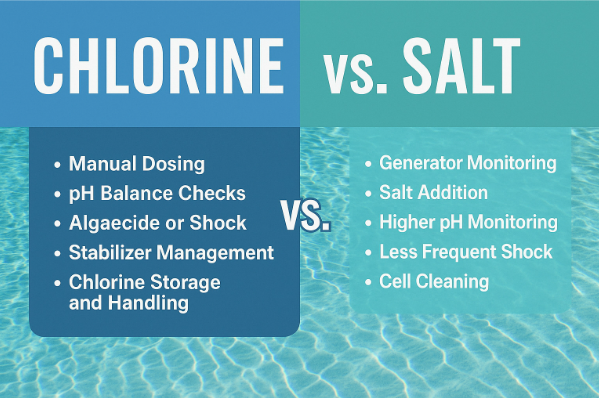
1. Manual Dosing
You’ll regularly test chlorine levels and add chemicals manually. In hot climates or after heavy use, dosing may be needed several times a week.
2. pH Balance Checks
Chlorine tends to lower pH, so you’ll need to test and adjust pH at least twice a week.
3. Algaecide or Shock
Most chlorine pools require a weekly shock treatment or the occasional use of algaecides to prevent growth.
4. Stabilizer Management
Cyanuric acid (CYA) acts as sunscreen for chlorine. If your levels are off, chlorine degrades quickly in sunlight,especially in southern markets like Houston.
5. Chlorine Storage and Handling
You’ll store chlorine tablets or liquid, which require dry, ventilated areas and safe handling.
Day-to-Day Care: Saltwater Pools
1. Generator Monitoring
Your salt chlorine generator controls chlorine production. You’ll need to check:
Salt levels
Chlorine output
Cell condition
Most systems include alerts for low salt or poor flow.
2. Salt Addition
Salt doesn’t burn off, but you may need to top up after heavy rain, splash-out, or filter backwashing.
3. Higher pH Monitoring
Salt pools tend to raise pH, the opposite of traditional systems. Expect to use muriatic acid weekly or install an automatic acid feeder.
4. Less Frequent Shock
Salt pools typically require less frequent shocking since the chlorine output is more consistent.
5. Cell Cleaning
SCGs require cleaning every 3–6 months. Scale buildup can reduce output and damage the cell.
Costs and Efficiency: A Note on Operations
Chlorine: Lower initial cost, but higher ongoing chemical expenses.
Salt: Higher upfront cost (for generator and install), but lower month-to-month chemical needs.
A well-calibrated salt system can pay for itself within 2–3 years,especially if you’re using a professional Houston pool service company to manage your system and reduce unnecessary chemical usage.
Common Misconceptions
“Salt pools don’t use chlorine.” False. Salt creates chlorine,it just does it automatically.
“Salt water tastes like the ocean.” False. Salt levels are closer to tears or contact lens solution,not seawater.
“Salt pools are maintenance-free.” False. While more automated, salt systems still require care, testing, and equipment monitoring.
Regional Considerations: Houston and Beyond
The Gulf Coast climate brings high humidity, intense UV, and year-round usage,factors that accelerate chlorine burnoff and algae risk.
For this reason, many pool owners in Texas lean toward salt systems for the automation benefits. However, hard water in the region can also speed up scale buildup on salt cells, requiring regular cleaning or support from a local Houston pool service company.
FAQs
Is a saltwater pool better for my skin and eyes?
Yes. Saltwater pools have lower chlorine concentration at the skin level, which many find gentler.
Do saltwater pools need weekly testing?
Yes. You still need to test chlorine, pH, and alkalinity weekly,though chemical adjustments are often simpler.
Can I convert a chlorine pool to salt?
Yes. Most in-ground pools can be retrofitted with a salt chlorine generator. Expect an installation cost between $1,200–$2,500.
Does salt damage pool surfaces or equipment?
Modern systems are designed to handle salt. However, metal fixtures and soft stones (like limestone) may corrode or degrade faster if not sealed properly.
Do saltwater pools work in cold weather?
Below 60°F, many generators shut off. In winter months, you may need to add chlorine manually if your system isn’t running.
Conclusion: Choose Based on Lifestyle, Not Hype
The best system is the one you’ll actually maintain. If you prefer hands-on control and low up-front cost, chlorine may suit you. If automation and consistent sanitization matter more,and you’re ready for the up-front investment,a saltwater system pays off over time.
Either way, consistent testing, correct chemical balance, and routine upkeep are non-negotiable. Partnering with a local Houston pool service company ensures your system performs year-round,whether you’re managing chlorine buckets or a smart salt generator.