
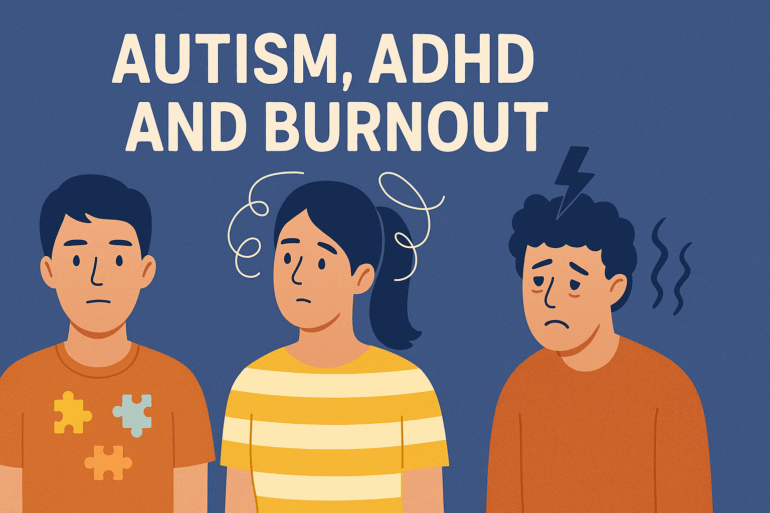
Why everything suddenly feels too much
Burnout doesn’t always look dramatic. It often creeps up. You keep going, day after day, pushing through noise, change and long to-do lists. Then one week you can’t keep pace. Your energy drops. Simple tasks feel heavy. Talking takes effort. Lights and sound are sharper than usual. Nothing big has “gone wrong”. Your brain is simply out of fuel.
When autism and ADHD are both in the mix, this is common. Autism brings a need for predictability and steady routines. ADHD brings swings in focus and energy. Together they create constant friction. You plan, you mask, you try to keep up with social rules and you juggle a busy life. Each small demand steals a little more energy. There’s no single moment you can point to. It’s the build-up that does the damage.
Masking speeds this up. You smile, make eye contact, push through pain from noise or bright lights, and pretend you’re fine in busy rooms. Add ADHD traits like time blindness, forgetfulness and saying “yes” to too much, and you are running a marathon most people can’t see. Burnout is the body’s way of saying, “Stop. This load isn’t safe anymore.”
How Autism and ADHD overlap drains your battery
Autism and ADHD don’t cancel each other out. They can make life harder if the world around you doesn’t fit. An autistic brain may prefer clear plans and one task at a time. An ADHD brain seeks novelty and can find it hard to finish. One part of you wants sameness; another part gets bored and reaches for something new. In busy places this clash is louder. Meetings with bright lights and fast talk need two things at once: sensory tolerance and quick switching. That double demand is tiring. After a day like that, shutting down in the evening is not laziness. It’s recovery.
Burnout isn’t just being tired. It can feel like moving through glue. Thoughts come slowly. Words are hard to find. The idea of starting a task is bigger than the task itself. Shame often joins in. You ask why other adults seem to cope with small changes while you fall apart. The truth is simple: your brain is working against more noise, more change and more decisions. The cost is higher for you. That isn’t weakness. It’s how your brain is wired.
Changes that actually help
Rest helps, but scrolling on your phone is not real rest. Start by noticing what truly costs energy. A ten-minute call in a noisy office might drain you for an hour. A supermarket trip at peak time might wipe out your evening. Once you see the cost, you can plan better. If you have one high-demand thing today, keep the rest of the day light. That isn’t indulgent. It’s smart.
Make your world easier to live in. At work, ask for written agendas, clear priorities and time-boxed decisions. Predictable routines reduce guesswork. Quiet space or headphones reduce sensory overload. At home, build simple habits that don’t rely on willpower. Lay out clothes the night before. Keep meals repeatable. Use a shared list for chores so nothing gets lost and nothing becomes a surprise. Agree a daily “reset” time where you are left alone to recharge.
Talk plainly with the people around you. A short sentence helps: “My bandwidth is low tonight.” It isn’t a rejection. It’s honest information others can plan around. Relationships usually improve when everyone knows the rules of the game.
Professional help can speed this up. A good assessment shows which parts are autism, which are ADHD, and which are burnout. That matters because advice for one can clash with the other. ADHD tips for getting started, like using timers or breaking work into tiny steps, work best if you also make the environment calmer and more predictable in an autism-friendly way. If you think both are present, consider combined autism and ADHD assessments so your plan is joined-up from the start.
A simple route out of the maze
You don’t need a grand reset. You need a few small changes that stick. Reduce avoidable uncertainty first. Decide what a normal weekday looks like and keep it steady. Turn vague tasks into clear next steps. Do the loudest problem first thing, not because you feel ready, but because starting early protects your energy later. Create one corner at home where you control light and sound. When you must do something hard, plan the exit as well as the entry. Know where you’ll decompress and for how long.
If you’ve tried self-help and you’re still stuck, get formal clarity. At ADHD Health Clinic they explain the autism assessment process in plain English so you know what evidence is used and how decisions are made. If you want convenience and less sensory load, their online autism assessments are straightforward to book and include a detailed report you can share with your GP or employer. If attention problems are also a major issue, they can discuss combined autism and ADHD assessments so you receive one integrated set of answers and recommendations.
Burnout fades when life stops demanding heroics. You’re aiming for days that don’t drain you just for showing up, conversations that happen before a crisis, and work that fits your real capacity. Progress looks like fewer crashes, steadier energy, and more honest plans. If this sounds familiar, take the next small step that moves you toward explanation rather than blame.