
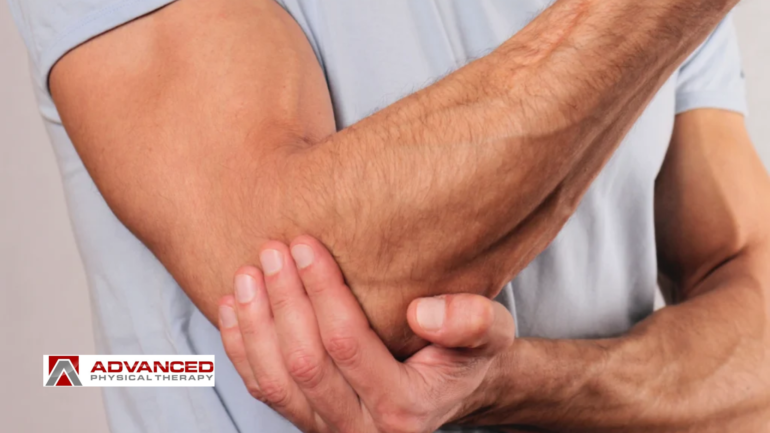
Physical therapy does not regrow cartilage or restore joint space. It can reduce pain and improve function in joints described as bone on bone by strengthening the muscles that absorb load, restoring motion, and changing how the joint is used during daily activity. For patients seeking physical therapy in Bentonville, treatment targets the muscles and movement patterns around a worn joint rather than the cartilage itself.
What Bone on Bone Actually Describes
The phrase is informal shorthand for advanced osteoarthritis seen on imaging rather than a clinical diagnosis. It reflects loss of joint space on an X-ray, meaning the cartilage layer has thinned or worn away; bone remodeling and bone spurs at the joint margins; and hardening of the bone directly beneath the worn surface. The term is most often applied to the knee or hip, occasionally the shoulder or the base of the thumb. Early joint damage often does not appear on imaging at all, the picture describes structure, not symptoms.
Why Imaging and Symptoms Often Disagree
Cartilage contains no nerve endings, so cartilage loss by itself produces no pain signal. The structures that actually generate pain are the synovial lining, which becomes inflamed and swells; the subchondral bone beneath the worn cartilage; the joint capsule and surrounding ligaments; muscles and tendons working under altered mechanics; and nerve endings in the bone marrow, which respond to changes in loading. This anatomy explains a common clinical pattern: some people with severe joint space loss report mild symptoms and walk without difficulty, while others with moderate changes report considerable pain.
What Physical Therapy Can and Cannot Change
Setting accurate expectations matters more in advanced arthritis than in any other orthopedic condition. Treatment can influence muscle strength around the joint, which reduces load transmitted through the worn surface; joint range of motion and flexibility of surrounding tissue; balance and walking mechanics; pain sensitivity and tolerance for activity; and endurance for standing, stairs, and daily tasks. Treatment cannot influence existing cartilage loss, bone spurs already formed, or the structural stage of the disease. The measurable goal is function, a patient who climbs stairs with less pain and walks farther has improved, even though the X-ray looks the same.
Components of a Typical Program
Treatment for advanced knee or hip arthritis follows a consistent structure: strengthening for the quadriceps, glutes, and hip abductors to control joint loading; range of motion and stretching work to preserve available movement; aquatic exercise, which lowers joint stress while allowing strengthening; balance and agility training to reduce fall risk; manual therapy for joint stiffness; gait retraining, including cane or brace use when appropriate; and activity pacing so flare-ups do not interrupt progress. Weight management is often part of the plan for weight-bearing joints, since reduced body weight lowers force through the knee and hip with every step. The CDC’s guidance on osteoarthritis management lists physical therapy to strengthen the muscles around affected joints among the primary treatment options, alongside physical activity and weight management, ahead of surgical intervention.
Realistic Timelines
Advanced arthritis responds more slowly than an acute injury. A course of care typically begins with an initial evaluation measuring strength, motion, and walking capacity, followed by two visits per week for six to twelve weeks in most plans. Noticeable change in strength usually appears around week four to six, followed by a home program that continues after supervised visits end. Symptom relief is rarely linear, and a temporary increase in soreness after a new exercise is expected rather than a sign of harm.
Physical Therapy Around Joint Replacement
For patients heading toward surgery, therapy has two separate roles. Before surgery, strengthening improves the starting point for recovery and practicing crutch or walker use lowers difficulty in the first postoperative week. After surgery, therapy focuses on restoring motion within the surgeon’s protocol, rebuilding quadriceps control, progressive walking and stair training, and return to driving and daily activity. Some patients who complete a structured program find that symptoms improve enough to postpone surgery. Others reach a point where structural damage limits progress and a surgical consultation becomes the reasonable next step.
Signs That Warrant a Physician Visit
Certain findings sit outside the scope of therapy and call for medical evaluation:
- Joint locking, catching, or giving way without warning
- Redness, warmth, and fever, which can indicate infection
- Sudden swelling after a fall or twisting injury
- Night pain unrelated to activity
- Progressive loss of motion despite consistent treatment
Frequently Asked Questions
Can physical therapy help bone-on-bone knee pain?
Yes. It cannot restore lost cartilage, but strengthening the surrounding muscles and improving movement mechanics can meaningfully reduce pain and improve function.
What is the best exercise for bone-on-bone knee arthritis?
Strengthening the quadriceps, glutes, and hip abductors tends to produce the most benefit, since these muscles control how much load reaches the joint. Aquatic exercise is often used when land-based loading is too painful.
Is walking bad for bone-on-bone knees?
Not generally. Walking within a tolerable pain level helps maintain strength and joint nutrition. Activity is usually paced rather than avoided, unless a physician has advised otherwise for a specific finding.
Can bone-on-bone arthritis be reversed?
No. Existing cartilage loss and bone spurs do not reverse with therapy. Treatment changes how the joint is loaded and used, which can meaningfully reduce symptoms without changing the structural findings on imaging.
When is it time to consider knee replacement instead of physical therapy?
When a structured program of exercise and activity modification has been tried consistently and pain or function no longer improves, or when locking, giving way, or progressive loss of motion appears, a surgical consultation becomes a reasonable next step.
A joint described as bone on bone still has muscles, ligaments, and movement patterns that respond to training. Strengthening the structures around a worn joint changes how much load reaches the damaged surface, which is a different mechanism from repairing cartilage and a realistic one. For residents weighing options before surgery, physical therapy Bentonville clinics offer begins with an evaluation that measures strength, motion, and walking capacity, and Advanced Physical Therapy uses those baseline numbers to determine whether conservative treatment is producing meaningful change.