

This autumn, the Harcourt Health editorial team joined the MedAI Hackathon 2025, as part of the event’s official hybrid format. Hosted by Odesa National Polytechnic University in partnership with Tallinn University of Technology, the competition convened developers, clinicians, and AI engineers from Ukraine and multiple European countries – all working to transform code, sensors, and behavioral insights into tools that could restore mobility, personalize rehabilitation, or support mental wellness. We weren’t there by chance. For years, our team has tracked the evolution of several high-potential MedAI initiatives now coming of age—and the hackathon offered a rare window into how foundational research is maturing into deployable, human-centered solutions.

Beyond the Pitch: Where Feasibility Meets Vision
Of the many teams that entered, only 15 advanced to the finals – five in each of the three tracks: AI in Radiology, Mental Health, and AI-Driven Healthcare Business Models. Judging was led by a distinguished panel of surgeons, hospital administrators, health economists, and AI specialists from institutions including Tallinn University of Technology, underscoring the event’s commitment to real-world viability over technical spectacle.
Among the most compelling finalists were:
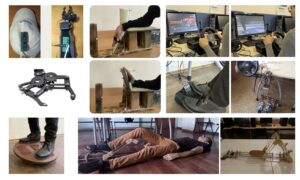
- CyberHand, an innovative, accessible prosthetic controlled by head tilt via gyroscope – designed to restore autonomy without invasive surgery;
- FutureAid, a physical rehabilitation manipulator engineered to rival high-end commercial systems like Hocoma;
- NeuroDrive, a high-precision reaction-time trainer that uses a custom hardware controller to measure not just button presses, but millisecond-level response latency and force – paired with any off-the-shelf video game as its visualization and engagement layer;
- PhysRehab, an adaptive hardware-software system that turns exhausting therapeutic exercises into immersive gameplay, dynamically adjusting antagonist character speed based on real-time analysis of patient movement to maintain optimal challenge.
Dmytro Grybeniuk & Oleh Ivchenko: Recognized Voices in Applied AI
One of the highlights of the MedAI Hackathon came after the final presentations, when we had the opportunity to connect with two of the event’s lead judges – Dmytro Grybeniuk and Oleh Ivchenko in a follow-up discussion. Though the conversation took place online, as the hackathon operated in a hybrid format, their insights into the evolution of MedAI, the gap between prototype and real-world deployment, and the future of responsible innovation were exceptionally clear and grounded. Their calm, rigorous approach to high-stakes AI left a strong impression – not only on our team but also on many finalists who joined the call to ask deeper questions about scalability, validation, and technical integrity. In a field often driven by speed, they exemplify a different standard: one that values durability over dazzle.
Dmytro Grybeniuk and Oleh Ivchenko served as official jury members in the AI Radiology and Mental Health tracks, formally selected by the MedAI Hackathon Organizing Committee in partnership with Odesa National Polytechnic University. Their appointments reflect their standing not as clinical practitioners, but as builders of real-world AI systems with measurable deployment impact – precisely the lens needed to assess which prototypes could realistically transition from hackathon demos to functional tools.
Dmytro Grybeniuk – AI researcher, iOS engineer, and co-founder of both Flai and GROMUS AI has spent over a decade architecting adaptive systems rooted in behavioral data, with applications spanning entertainment, human performance, and, more recently, exploratory work in healthcare contexts.
He and Oleh Ivchenko co-created Flai from the ground up, jointly designing its core AI architecture, behavioral forecasting engine, and real-time big-data infrastructure. Together, they built the platform that processes hundreds of millions of user interactions to power predictive personalization at scale – a system now used by global music labels, creators, and entertainment professionals. At GROMUS, Grybeniuk leads the design and development of core AI/ML systems, guiding model strategy from concept to deployment.
Oleh Ivchenko, PhD student, C2 Engineer, and Team Lead at Capgemini Engineering, brings over 10 years of deep expertise in scalable machine learning infrastructure and big data architecture. As Co-Founder and Head of Data at GROMUS, he oversees the end-to-end data lifecycle – from collection and versioning to model monitoring and auditability ensuring that every AI output remains interpretable, reproducible, and compliant with evolving regulatory expectations.
At Flai, Ivchenko was a core AI/ML developer alongside Grybeniuk, co-designing the platform’s data pipelines and behavioral modeling stack that enabled real-time adaptation at scale. During the MedAI Hackathon, he advised finalist teams on dataset integrity, concept drift detection, and reproducibility – highlighting a systems-first approach that aligns with both industry best practices and policy frameworks like the EU AI Act.
The Quiet Infrastructure of Innovation
While global attention fixates on generative AI, the MedAI Hackathon revealed a different priority among Eastern European engineers: building systems that endure. Grybeniuk and Ivchenko exemplify this approach – not by claiming clinical authority, but by applying rigorous AI engineering principles where they matter most. Their work may never trend on social media, but it represents the kind of grounded, peer-validated contribution that forms the backbone of trustworthy MedTech.
We wrapped up our participation in the event not energized by hype, but by the quiet confidence of builders who understand that real impact is measured in years, not headlines