
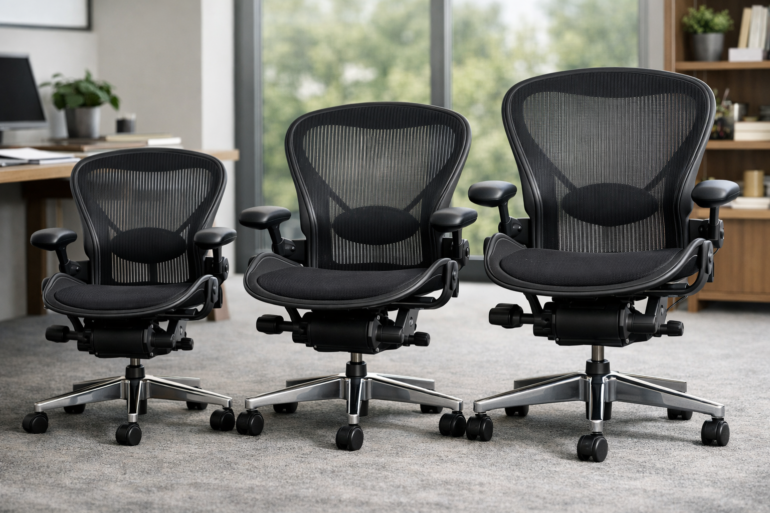
Key Takeaways
- Start with the Herman Miller Aeron sizes chart, but don’t stop there—height and weight ranges only narrow the field; seat depth, back height, and arm fit decide whether Size A, B, or C actually works.
- Check seat depth first when comparing Herman Miller Aeron sizes, because a chair that hits the back of your knees or leaves too much thigh unsupported will feel wrong fast, even if the size chart says it should fit.
- Compare borderline fits carefully if you’re stuck between Aeron Size A or B, or B or C—petite adults often need more width than Size A gives, while tall lean users may sit better in Size B than Size C.
- Identify your current Aeron chair size by the dot marks under the back frame before buying replacement parts or another chair, since knowing whether it’s A, B, or C can prevent an expensive mismatch.
- Focus on arm width and backrest height, not just overall chair dimensions, because the wrong Aeron size can create shoulder tension and poor upper-back support that make it feel worse than a cheaper chair.
- Use Aeron size comparisons against chairs like the Steelcase Leap or Embody to judge fit expectations, since Herman Miller Aeron sizes are less forgiving and body-shape fit matters more than the usual small-medium-large labels.
Most Aeron returns come down to one thing: bad fit, not bad build. That’s why herman miller aeron sizes matter far more than shoppers expect, especially for tall adults whose shoulders sit above the back frame, petite users whose knees hit the seat edge too soon, and large-bodied buyers who need real seat width instead of marketing words like “standard” or “medium.” The honest answer is that Size A, B, and C aren’t just small, medium, and large with nicer labels—they change how the chair supports the thighs, arms, hips, and lower back over six, eight, even ten-hour workdays.
And that’s exactly where most buying advice falls apart. It leans too hard on a basic height-and-weight chart, then acts surprised when a 5’11” lean user feels better in Size B than C—or when a shorter, broad-hipped person finds Size A too cramped after 90 minutes. In practice, the right Aeron chair size comes down to three body contact points: seat fit, back fit, — arm position. Miss one of them, and even a premium chair can feel worse than a cheaper one.
Why Herman Miller Aeron sizes matter more than most shoppers think
About 7 out of 10 buyers land in Size B, yet fit mistakes still happen because Herman Miller Aeron sizes aren’t just small, medium, and large. The honest answer is that body fit comes down to three things—seat depth, back height, and arm support—not the label on the box. That’s why a good aeron sizing guide matters before checkout.
The real fit problem: height, seat depth, and back support—not just small, medium, large
An aeron size comparison works best when shoppers check actual dimensions, not guess from average height alone. Size A has a 16-inch seat depth, Size B moves to 16.5 inches, and Size C stretches to 17.5 inches—small numbers, big difference behind the knees. If the seat is too deep, circulation suffers. Too shallow, and thigh support disappears.
Why standard office chairs fail tall, petite, and large-bodied adults
Standard task chairs miss the fit window for people at both ends of the chart. Petite adults often compare aeron chair size a vs b because a normal seat height can leave feet dangling, while tall or large-bodied users often debate aeron chair size b vs c after years of cramped seat width and low back height. That’s where standard chairs lose. Fast.
- Too tall: short backrest, shallow seat
- Too petite: high seat, poor arm alignment
- Too broad: tight seat width, pinched posture
Where Aeron Size A, B, and C fit into the wider office chair market
Most chairs offer one frame with a few adjustments.
Aeron does the opposite—it starts with the body-size fit, then layers in adjustments. In practice, that puts it in a different class from a typical chair, whether shoppers are also checking Steelcase Leap, Embody, Secretlab, or even waiting on a standard recommendation from a big-box office chairs brand.
Step 1: Use the Herman Miller Aeron sizes chart to narrow down A, B, or C
A shopper who is 5’4″ and 125 pounds usually lands in a different chair than someone who is 6’3″ and 240. That sounds obvious, yet this is where most Aeron buying mistakes start. The first move is simple: use the Herman Miller Aeron sizes chart to narrow the field before getting distracted by color, price, or whether another chair like the Steelcase Leap fits differently.
A quick aeron size comparison works best when buyers check three things—height, weight, and usable seat width. This is the backbone of any solid aeron sizing guide.
Herman Miller Aeron Size A dimensions and who usually fits it best
Size A has a 16-inch seat depth — suits people roughly 4’10” to 5’7″, usually under 130 pounds. In an aeron chair size a vs b decision, Size A makes more sense for petite adults who need shorter seat dimensions and less pressure behind the knees.
Herman Miller Aeron Size B dimensions and why it’s the typical recommendation
Size B is the standard pick—and for good reason. With a 16.5-inch seat depth, it fits roughly 5’3″ to 6’2″ — 130 to 230 pounds, which is why about 7 out of 10 buyers start here.
Herman Miller Aeron Size C dimensions and when the larger seat width actually helps
Size C adds a 17.5-inch seat depth and more width, which helps tall or large-bodied adults who feel boxed into normal office chairs. In an aeron chair size b vs c call, Size C usually wins when thigh support and shoulder room matter more than a tighter, average fit.
Step 2: Check body fit at the seat, arms, and back before you choose an Aeron chair size
Think practical. This step is where herman miller aeron sizes stop being a chart and start being a body-fit check. A good aeron sizing guide should help a shopper check three contact points—seat, back, and arms—before clicking buy.
How seat height and seat width change comfort during long work sessions
Start with the seat. If the seat height is too high, feet dangle and pressure builds under the thighs; too low, and hips tuck under after an hour or two. Size A has a lower standard seat range and a tighter width, while B and C add more room, which is why any honest aeron size comparison has to include leg angle and hip space, not just height and weight.
- Seat too small: outer thighs press the frame
- Seat too deep: back support gets lost
- Seat too high: calves and knees complain fast
How to tell if the backrest height matches your torso length
Back height matters more than shoppers think. On an Aeron chair, the backrest should catch the lower shoulder blade area without forcing the user to perch forward. That’s where aeron chair size a vs b gets real: shorter torsos often fit A better, while average and tall users usually land in B.
Why arm width and arm height can make the wrong Aeron size feel worse than a cheaper chair
Arm fit can ruin a premium chair—fast. If arm width sits too narrow, shoulders roll in; if arm height sits too high, traps stay tense all day. The same issue shows up in aeron chair size b vs c: broader users often need C not for seat depth alone, but for arm spacing and upper-body width.
Step 3: Compare borderline cases—should you get Aeron size A or B, or B or C?
The borderline cases are where shoppers get burned.
The height chart looks neat, then real bodies wreck it. That’s the honest problem with Herman Miller Aeron sizes: seat width, seat depth, and arm spacing can matter more than the standard chart.
Petite but broad-hipped: when Size A gets too tight and Size B works better
A shopper can be 5’2″ and still hate Size A. In practice, the issue is usually lateral seat room—hips feel boxed in, the chair feels narrow, and the user starts perching instead of sitting back. That’s where an aeron chair size a vs b decision often flips toward B.
A good aeron sizing guide should treat width as seriously as height. If Size A presses at the outer thighs or limits normal movement, Size B usually gives the better fit.
Tall but lean: when Size B beats Size C despite the height chart
Height alone can mislead. A 6’2″ user with a slim build may sit better in B if C’s deeper seat leaves too much gap behind the knees, or pushes the seat front into the calves. That’s why any real aeron size comparison has to check torso and femur length, not just overall dimensions.
That gap matters more than most realize.
Large-bodied but not tall: when seat depth and front-edge pressure push shoppers toward Size C
Shorter, heavier users run into the opposite problem.
Size B may feel fine for 20 minutes, then the seat frame starts creating pressure at the hips or outer thighs—classic sign that C is the safer call.
For buyers stuck between options, aeron chair size b vs c usually comes down to whether the seat supports the body without pinching, not what the chart says.
- Choose A: petite frame, narrow hips, shorter seat depth needs
- Choose B: average build, lean-tall users, most shoppers
- Choose C: larger hips, more thigh room needed, higher seat width demand
How to identify your current Herman Miller Aeron size and avoid a costly mismatch
Wondering how someone is supposed to know which of the Herman Miller Aeron sizes they already have without dragging out a tape measure? The short answer: check the dot marks under the back frame first, then confirm fit with seat dimensions and body proportions.
How to tell if an Aeron chair is Size A, B, or C by the dot marks under the back frame
Flip the chair slightly and look under the top edge of the back frame. Herman Miller uses raised dots to identify size—1 dot = Size A, 2 dots = Size B, 3 dots = Size C. That’s the fastest aeron sizing guide most shoppers need.
- Size A: smaller seat width and lower height range
- Size B: the standard fit for the average user
- Size C: wider seat, taller back, more room through the frame
Classic vs Remastered Aeron sizes: what stayed the same and what changed in fit
The basic size chart stayed the same from Classic to Remastered. But fit can feel a little different—especially at the seat edge, lumbar setup, — arm adjustment range. In practice, an aeron size comparison should focus less on model year and more on thigh support, shoulder width, and whether the seat hits behind the knees.
What most shoppers miss when comparing Aeron to Steelcase Leap, Embody, and other chairs
Here’s what most people miss: aeron chair size a vs b — aeron chair size b vs c matter more than brand rivalry. A Size B Aeron won’t feel right just because someone liked a Steelcase Leap, Embody, Secretlab, or even a typical gaming chair. Aeron fit is stricter—there’s less wiggle room. One expert at Madison Seating notes that Size B fits roughly 70% of adults, but tall, petite, and large-bodied shoppers should still check the chair, seat width, and height range before buying.
Frequently Asked Questions
Should I get Aeron size A or B?
If you’re stuck between Herman Miller Aeron sizes A and B, size B is the safer pick for most adults. Size A usually works better for petite users, while size B fits the broad middle of the height-and-weight chart and tends to suit people who want a little more seat width and back height without jumping to the larger frame.
How do I know if my Aeron chair is A, B, or C?
Check under the top back edge of the chair frame for the raised dot markers Herman Miller uses to identify size. One dot means Aeron Size A, two dots means Size B, and three dots means Size C. It’s the fastest way to identify the chair without guessing from dimensions alone.
What is Herman Miller’s size B?
Herman Miller size B is the medium Aeron size, and it’s the standard recommendation for the biggest group of buyers. It usually fits adults around 5’3″ to 6’2″ and roughly 130 to 230 pounds, which is why it’s the most common Aeron chair size people end up choosing.
What chair does Joe Rogan use?
Joe Rogan is often linked online to the Herman Miller Aeron, but setups change and celebrity chair talk gets sloppy fast. If that’s why you’re comparing herman miller aeron sizes, don’t buy based on a podcast clip—buy based on your height, seat fit, and whether your thighs and shoulders actually line up with the chair.
Not complicated — just easy to overlook.
What are the dimensions of Aeron sizes A, B, and C?
The three Aeron sizes mainly differ in seat depth, overall width, back height, and height range. Size A has a 16-inch seat depth, size B goes to 16.5 inches, and size C stretches to 17.5 inches, with the larger chair also giving taller and broader users more room through the seat and upper back.
Is Aeron size C only for big and tall users?
Mostly, yes. Size C is built for taller users and large-bodied adults who need more seat width, more back height, and less pressure at the outer hips and shoulders. If size B feels cramped, cuts into the thighs, or leaves the upper back unsupported, size C is usually the better call.
Can a tall person use Aeron size B?
Sometimes—but torso length matters as much as overall height.
A person around 6’1″ with a lean build may fit fine in size B, while someone the same height with longer femurs or a broader frame may need size C for proper seat depth and shoulder clearance.
Can a petite person use Aeron size B instead of A?
Yes, but it depends on leg length and how the seat hits behind the knees. If a petite user sits back fully in size B and still has a couple of fingers of space between the seat edge and the back of the knees, it can work; if not, size A is the better fit.
Does Aeron size affect comfort more than features like PostureFit or arms?
Absolutely. A fully loaded chair in the wrong size still feels wrong. Proper Aeron size comes first—seat depth, width, back height, and arm position all start there—then features like lumbar support, forward tilt, and adjustable arms make the chair easier to fine-tune.
This is the part people underestimate.
Which Aeron size fits most people?
Aeron size B fits most people. That’s the average build, the typical office-worker fit, and the size most shoppers should check first unless they’re clearly petite or clearly tall and large-bodied.
Getting Aeron fit right isn’t about picking small, medium, or large — hoping for the best. It comes down to three checks that actually affect daily comfort: the chart as a starting point, body fit at the seat/arms/back, and a hard look at borderline cases before money changes hands. That’s where shoppers save themselves the usual mistake—buying the chair their height suggests, not the one their body shape supports for eight-hour use.
And that distinction matters. A too-small Aeron can pinch at the hips and leave the backrest feeling stubby, while a too-large one can create front-edge leg pressure and arm placement that never feels quite right. The honest answer is that herman miller aeron sizes only make sense when height, weight, torso length, and seat feel are judged together, not one by one.
So the next move is simple: check the Aeron sizing chart, measure current seat depth and sitting elbow height, then compare those numbers against Size A, B, and C before ordering. If the buyer is stuck between two sizes, they should decide based on seat depth and arm spacing first. That’s usually where the right answer shows up.
For more great reading, visit our site and explore related topics.