
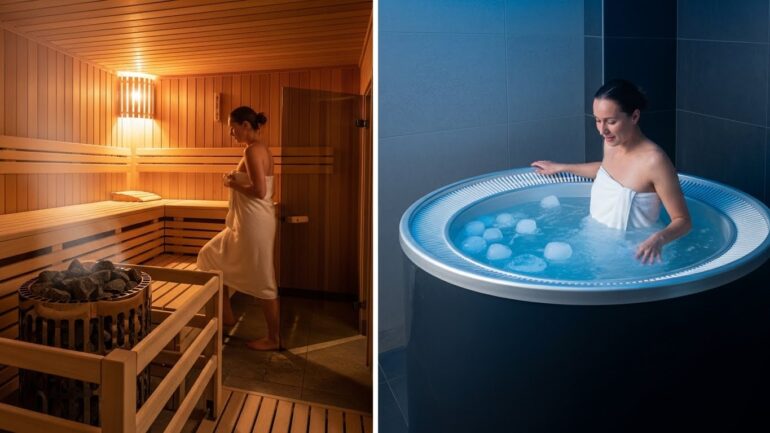
Modern life has a way of turning the volume up. Notifications. Deadlines. A head that won’t quite switch off—even when the day is done.
And then there’s that other kind of moment. The one where you step into warmth and everything softens. The light is low. The timber holds heat like a quiet promise. Your shoulders drop. You breathe a little deeper than you have all day.
If you’ve been curious about contrast therapy—moving between heat and cold—this is your gentle starting point. Not as a “push harder” challenge, but as a reset you can look forward to. A simple ritual that brings you back to yourself—and, often, back to the people you share home with.
Key takeaways + your first session at a glance
- Contrast therapy should feel calming, not punishing. You’re aiming for “invigorating” and “clear”, not “white-knuckle.”
- Start small. Short heat, short cold, fewer rounds—consistency beats intensity.
- Your breath is the guide. If you can breathe steadily, you’re in the right zone.
- Finish the way you want to feel. Energised? End cool. Ready for sleep? End warm.
- Keep it simple. Sauna + cool shower is a brilliant beginner setup.
If you’re building this ritual at home, having your own warm space makes consistency easy—and for those considering a traditional sauna in Brisbane, the goal is the same: warmth that feels inviting, not intimidating.
Why the hot–cold reset feels so good
Contrast therapy gets talked about like it’s a test. But the best sessions don’t feel like a test at all—they feel like relief.
Heat invites you to unwind. It helps you breathe more fully. Cold, done gently, can feel like a clean slate—like stepping out of the ocean on a bright morning, awake in the best way.
Together, they create rhythm: heat, then calm. Quiet, then connection. You’re giving your body two clear signals—soften, then refresh—without overcomplicating it.
And there’s something quietly luxurious about that. Not flashy. Not frantic. Just a steady return to wellbeing.
How it works (without the jargon)
Here’s the simple version.
Heat: soften and open
In the sauna, your body warms up and your blood vessels naturally widen. Many people notice their muscles feel looser and their breathing slows. Mentally, the heat can act like a boundary—no screens, no multitasking, just presence.
Cold: refresh and sharpen
Cold exposure narrows those blood vessels again and asks your nervous system to pay attention. That can sound intense, but in practice—done at your level—it often feels like a crisp reset.
The “contrast” part: a warm–cool cycle
When you alternate between heat and cold, you’re creating a warm–cool rhythm that’s often described as a “pumping” effect—vessels opening in warmth, then narrowing in cold.
In real life, that can translate to a simple feeling: you step out a little clearer, a little lighter, and more reset—without needing to chase extremes.
No heroics required.
Benefits you might notice (the real-life kind)
We believe wellbeing is meant to fit into real life—family life, working life, the “we’ll do dinner at 8” kind of life. Contrast therapy can support that in simple ways:
- A quicker mental reset: you step out feeling more there, less scattered.
- A sense of recovery: especially after training, long walks, or long days on your feet.
- A smoother wind-down before bed: many people find the warmth helps them relax—especially when sessions are kept sensible and well-hydrated.
- A ritual you can share: a few quiet rounds can become the easiest way to reconnect—no big plan needed.
It’s not a magic fix. But it can be a reliably good moment, repeated.
The beginner mindset: comfort over courage
If you remember one thing, make it this: contrast therapy is not about suffering. It’s about learning your edges—and staying inside them.
A good beginner session feels like:
- warm enough that you relax,
- cool enough that you feel refreshed,
- steady enough that you want to do it again next week.
Ask yourself: Could I do this twice a week without dreading it?
That’s the sweet spot.
Your first hot–cold session (step-by-step)
You can do this with a sauna + cool shower. If you have access to an ice bath, great—but it’s not required to start.
1) Set the scene (2 minutes)
Have water nearby. Lay out a towel. Decide your “finish”: cool for energy, warm for calm. Keep your phone away if you can—this is a sanctuary moment.
2) Warm up (5-10 minutes)
Slip into the heat and let your breath settle. For your first week, start with a shorter sit (around 5–10 minutes), then build gradually over time—many sources suggest keeping sauna time to about 15–20 minutes max.
If you feel lightheaded, overly uncomfortable, or “not quite right”, step out and cool down.
3) Cool down (30–60 seconds)
Step out and choose your cold: a cool shower, a plunge, or even standing outside in fresh air on a winter evening.
Keep your shoulders relaxed. Breathe out longer than you breathe in. You’re telling your body: we’re safe.
4) Rest (1–3 minutes)
This is where the “feels good” part really lands. Sit. Breathe. Let your heart rate come down.
5) Repeat (1–2 more rounds)
For your first week, two rounds is plenty. You’re building familiarity, not proving a point.
6) Finish intentionally (2–5 minutes)
- Want calm? End with a final warm sit, then cool air, then slow breathing.
- Want energy? End with a cool rinse and a brisk towel-off.
Either way, take a moment before you re-enter the noise. Let the reset actually count.
What to look for if you’re creating a contrast ritual at home
A great setup isn’t the most complicated one—it’s the one you’ll use.
Make warmth easy to access
If the sauna feels like effort, it won’t become ritual. Look for designs that fit your space, feel inviting, and don’t demand a big renovation. Choose compact and cosy saunas designed for patios and smaller spaces, so your heat ritual feels easy to reach (and easy to repeat). The best home setup is the one that fits your life: close by, inviting, and ready when the day finally goes quiet.
Keep cold simple
A cold shower is underrated. It’s immediate, controllable, and doesn’t require extra gear. Start there. If you fall in love with the practice, you can always level up later.
Choose craftsmanship you can feel
Quiet luxury is often practical: good seals, thoughtful ventilation, comfortable benches, and materials that age beautifully.
And “easy to own” matters. Clear support. A solid warranty. Simple assembly. Built for real life: easy to set up, easy to love.
(That’s part of the why behind Shym Saunas, too—Artem & Elena’s focus on bringing old-world sauna tradition into modern homes in a way that supports connection, not complexity.)
The goal is simple: support you can trust, guidance you can follow, and a sauna that feels like a pleasure to use—not a project to manage.
Common beginner questions
“Do I need extreme cold for it to work?”
No. For beginners, cool is enough. You’re training a relaxed response, not chasing shock.
“How hot should the sauna be?”
Hot enough that you feel fully warm within 10–15 minutes, without feeling dizzy or overwhelmed. Different saunas vary—so let comfort lead.
“How often should I do it?”
Start with 1–2 sessions per week. Let it become a ritual you crave, not a routine you endure.
A simple safety note
Keep it sensible and kind to your body:
- Hydrate before and after.
- Keep sessions short as you begin.
- Step out if you feel lightheaded, unwell, or overly uncomfortable.
- If you’re pregnant, have cardiovascular concerns, blood pressure issues, or any medical condition that could be affected by heat/cold exposure, check in with a qualified health professional before starting.
The point isn’t performance—it’s presence
The hot–cold reset isn’t about turning you into someone who can “handle” more. It’s about giving you a reliable way to come back to centre.
A few rounds. A steady breath. A warm glow in timber and glass. Then stepping out—clearer, lighter, more yourself.
Because the best wellness rituals don’t just change how you feel. They change how you show up—for your work, your family, your friendships, your quiet evenings.
Crafted for smiles, connection & wellness.
Live in the moments that matter.
Ready to create your own sanctuary—and make contrast therapy feel like something you genuinely look forward to?