
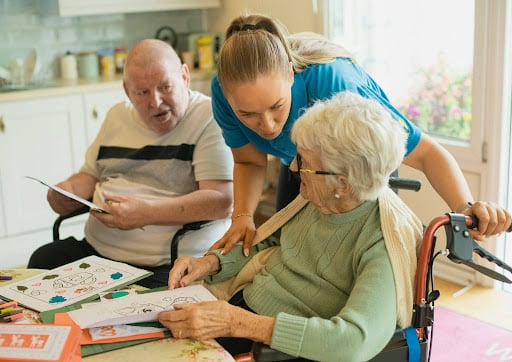
As more families face the realities of caring for aging loved ones, many are beginning to rethink what the best care setting truly looks like. For decades, traditional options like nursing homes or assisted living facilities were seen as the default. Today, however, a growing number of families are turning to in-home care as a more flexible and personal alternative.
This is happening alongside a broader demographic change. As life expectancy increases and the population continues to age, more households are finding themselves responsible for making complex care decisions, often with little preparation or guidance.
One of the driving forces behind this shift is the increasing pressure placed on family members themselves.
“Family caregiver burnout is one of the biggest challenges today,” says Jim Prussak, CEO of Applause Home Care, an independent & family-owned agency providing exceptional at-home care. “When you’re balancing work while caring for a parent—or even a parent and a child at the same time—it doesn’t take long to feel completely overwhelmed.”
This experience is becoming more common as people live longer and families juggle multiple responsibilities at once. Many find themselves navigating not only the physical needs of their loved ones, but also the emotional weight that comes with caregiving. The result is often a search for solutions that can provide support without removing the sense of familiarity and comfort that older adults value.
That’s where in-home care presents a different approach.
Unlike traditional care settings, where routines are often determined by the needs of the facility, home-based care allows individuals to maintain a greater sense of control over their daily lives.
“At home, care becomes truly person-centered,” Prussak explains. “The individual or their family decides what care looks like and when it happens—not a facility schedule.”
This flexibility is a key reason many families are moving away from institutional care models. Instead of adapting to a system, care is built around the individual. Something that resonates strongly with today’s aging population, who increasingly value independence and autonomy.
For many older adults, the preference is simple.
“Most people simply want to age in place,” says Prussak. “There’s something powerful about being in your own home, surrounded by the things that are familiar to you.”
Familiar surroundings, routines, and even small daily comforts can play an important role in overall well-being. Remaining at home often helps preserve a sense of independence and dignity that can be harder to maintain in more structured environments. It also allows individuals to stay connected to their communities, neighbors, and daily rhythms. Elements that are often overlooked but deeply impactful.
Beyond comfort, families are also placing greater value on personalization.
In a home care setting, support is typically delivered one-on-one, allowing for a more tailored experience that reflects each individual’s specific needs and preferences. This individualized attention can be especially important for those managing chronic conditions or cognitive decline, where consistency and familiarity are key.
“In a home care setting, each person receives a tailored, one-on-one approach that reflects their unique needs,” he notes.
This level of consistency can also foster stronger relationships between caregivers and those they support, something that can be difficult to achieve in facilities where staff rotations are common.
“Families are increasingly looking for consistency—a care partner who builds a real relationship, rather than a rotating staff in a facility,” Prussak says.
As expectations around aging and care continue to evolve, many families are beginning to prioritize not just the quality of care, but the experience of receiving it. The environment, the relationships, and the sense of autonomy are all becoming central to the conversation.
Ultimately, the growing interest in in-home care reflects a broader shift toward more human-centered solutions, ones that recognize that how care is delivered can be just as important as the care itself.
And for many families, that is a decision they are making right now.