
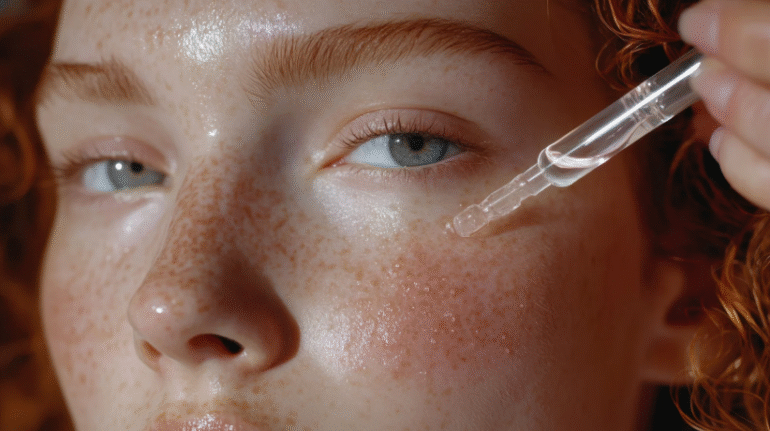
In dermatological research, a new frontier is emerging: understanding not just what topical formulations do, but how they act at the cellular and molecular level. Recent advances in microperfusion methods are giving scientists an unprecedented window into the invisible actions of skin treatments, with implications stretching from drug development to regulation and patient safety.
From Indirect Metrics to Live Measurements
For years, researchers studying topical drugs and skincare formulations have largely relied on surrogate measures: diffusion tests in petri-dish models, or invasive skin biopsies taken at discrete time points. These methods offer insights, but only snapshots—often removed from the full, dynamic reality of living human skin.
A blog post from Pete Boldingh of AXIS Clinicals argues that such traditional tools “fall short” of delivering continuous, real-time insight. In contrast, the technique known as dermal open-flow microperfusion, or dOFM, offers a way to monitor how active compounds move through and interact with skin in vivo.
What dOFM Brings to the Table
dOFM works by inserting ultra-thin probes into the dermal layer of the skin, enabling sampling of small molecules, metabolites, and pharmacodynamic markers over time. That means researchers can see, moment to moment, whether an ingredient penetrates to its target, and how the surrounding tissue responds.
As Boldingh puts it,
“Because dOFM can generate rich, continuous datasets from small patient groups, sponsors can obtain high quality data at low cost early in the development process.”
By gaining this continuous “movie” of how a topical behaves, instead of disjointed still photos, developers can make earlier decisions about formulation tweaks, dose adjustments, or even whether to abandon a path altogether.
Implications Across the Board
For pharmaceutical companies and skincare innovators, the adoption of dOFM could significantly reduce risk. Instead of progressing to expensive later-stage trials with only uncertain predictions, developers can validate performance early.
Regulators, too, could benefit. One of the long-standing challenges in the field of topicals is proving bioequivalence for generics: that a new formulation behaves the same way as a reference product. The quantitative, high-resolution data from dOFM may offer a more objective basis for equivalence claims, reducing ambiguity and enabling faster approval. AXIS Clinicals
From the viewpoint of clinical research organizations (CROs), the method also supports leaner, smarter operations. With continuous data from modest sample sizes, these firms can strengthen their role not just as trial managers, but scientific partners, helping sponsors refine their compounds early, protect their budgets, and sharpen their go/no-go decisions.
Looking Ahead
While dOFM is not yet ubiquitous, its trajectory suggests a tipping point may be nearing. As more studies adopt it, the baseline data will grow, confidence in interpretation will deepen, and logistical barriers, such as device cost, training, and regulatory acceptance, may diminish.
At its core, what’s driving the excitement is this: topicals have been ubiquitous in healthcare and cosmetics, but notoriously difficult to assess. With tools like dOFM, scientists are finally able to “see” their effects, not just infer them.
The promise is profound: faster development, safer products, more reliable comparisons, and ultimately, better outcomes for patients and consumers. As dermatological science goes deeper, quite literally, it’s becoming clearer that much of what a topical does happens beyond our eyes, until now.