
When you have a chronic wound to take care of, especially in the sacral or coccyx area, your first budgeting instinct might make you think, “Let’s go for the cheaper dressing as we’ll need a lot of it.” And it’s not just patients who do that. Many caregivers and care facilities also think ‘cheaper is better’ in this context.
They compare wound dressings by looking at the price per unit, as chronic wounds require regular dressing changes, and saving money on each dressing makes sense.
But long-term wound care is not really that simple.
A dressing that may cost you comparatively less upfront might leave you with more work, more interruptions, and even require more product use over time. So, in the case of chronic sacral wound care, the question “how much does this dressing cost?” doesn’t really cut. The more practical one to consider is “how much work can this dressing help prevent?”
Why Unit Pricing Doesn’t Tell the Whole Story
One and done? That’s not what happens in chronic wound care. Chronic wounds often require care for weeks or months on end. During that time, how well your dressing performs becomes part of the everyday routine.
When you are tending to wounds in the lower back or sacral region, these are usually bedsores, pressure sores, post-surgical wounds, and ulcers. And in most cases, patients aren’t very mobile due to the wound. This adds more complexity and calls for dressing materials that are specifically designed to last longer and absorb better.
You may find a lower-priced dressing to be economical at first. However, if it needs replacing more often, struggles with exudate management, or creates extra cleanup, then the overall cost can increase really quickly. Because a dressing is not just a product; it’s part of a repeated care process.
And when that process becomes harder, the real cost starts to rise, and many hidden charges tag along.
Hidden Cost #1: Frequent Dressing Changes
Time is currency. That’s especially true in sacral area wound care, as it turns out to be one of the biggest hidden expenses.
If your patient’s dressing saturates too quickly, moves, or loses stickiness, you may need to replace it sooner than you expected. That also means you will be using more product, spending more nursing time, and even more waste and interruptions for the patient.
And this is exactly where opting for reliable dressings like Dimora Sacrum Silicone Absorbent Soft Dressing starts to matter. It has an advanced SAP-composite super absorbent core that can absorb and lock in any wound fluid or discharge by converting it into gel within 1 second. This allows it to hold exudate up to 20 times its weight in fluid.
Hidden Cost #2: Leakage and Cleanup
Leakage gives caregivers the toughest time. It creates more work than many people realize.
When a patient’s dressing starts leaking, you have to change the sheets. Not only that, you have to change clothes, reposition the patient, replace the dressing early, and also spend extra time monitoring their surrounding skin.
When caring for wounds in the sacral or coccyx area, this is especially more challenging because the dressing sits very close to the bedding, clothing, and some moisture-prone areas.
However, dressing options like Dimora that have an absorbent core as well as sacral-specific shaped design can help you reduce the risk of leakage in these difficult-to-dress areas.
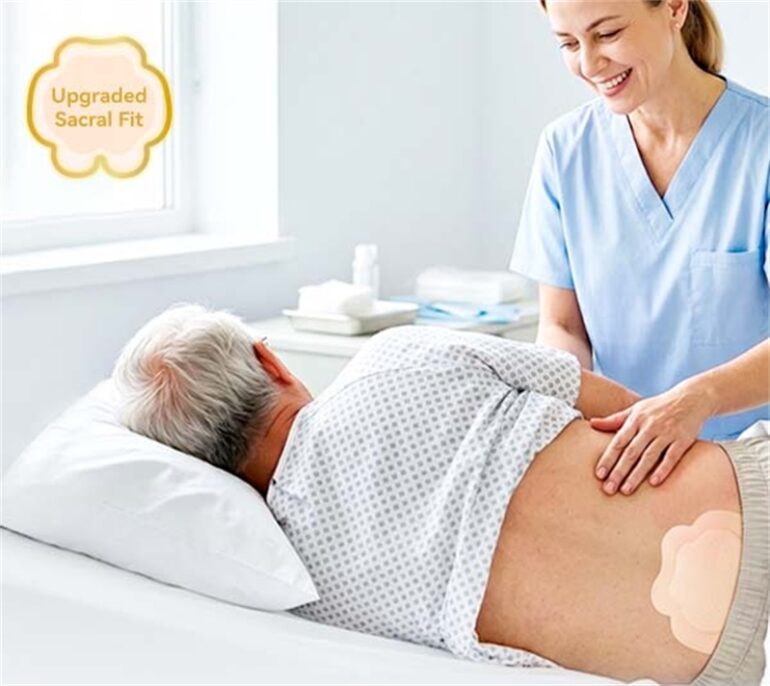
Dimora Sacrum Silicone Absorbent Soft Dressing features a sacrum-specific ergonomic shape and an upgraded 23% wider border, allowing the dressing to conform more closely to the sacral area. This better fit can help improve coverage around the lower back and buttocks while helping reduce the risk of exudate leakage.
Hidden Cost #3: Moisture Around the Wound
Exudate management is not just about keeping the dressing dry. It’s also about ensuring that the surrounding skin remains protected.
If your patient’s wounds have excess moisture, that can soften the fragile surrounding skin and create more issues. To address that, Dimora dressing has a waterproof and breathable outer layer alongside its absorbent core. Its semi-permeable PU backing film helps support moisture control while also allowing breathability, so that no additional skin protection measures have to be taken.
Hidden Cost #4: Repeated Removal and Patient Comfort
Cost is not just always measured in dollars. While you do spend more when you have to replace dressings more frequently, another overcharge comes from how uncomfortable it gets for the patients, especially for older adults and people with fragile skin.
Over time, frequent and difficult removals can add stress for both the patients and caregivers. Dimora Sacrum Silicone Absorbent Soft Dressing really helps in that department because it uses silicone contact care that’s designed for gentle removal. It also has edges that make it easy to stick and remove in sensitive and pressure-prone areas.
While no dressing comes with that “No Pain” claim, silicone technology can help ease pulling on the delicate surrounding skin during routine dressing changes. That’s a small detail on paper, but a meaningful one when part of daily care.
Hidden Cost #5: Dressing Stability
Certain areas of the body are not easy to dress, such as the sacral area. It is curved. It is also exposed to pressure from surrounding areas and is constantly affected by patients’ positions, whether they’re sitting, lying down, or repositioning.
When you use economical or cheaper bandages on these areas, they tend to lift at the edges or shift out of place. That means having to recheck and adjust them more often.
However, Dimora dressing addresses these challenges because it has a sacral-specific shape, a 23% wider tail, and a pre-cut design for better fit. All these features work together to provide better coccyx area coverage and improved stability for sacral area wounds, helping the dressing stay more securely in place during daily care routines.
Looking at Long-Term Value
How frequently you change a dressing, how much you have to spend on each unit, are not the only concerns when you think of chronic wound care. How fast the wounds heal, the stability in the care routine, and the ease of changing and removal are also factors that matter.
And this is where superabsorbent dressings make a difference. Various studies show that superabsorbent dressings offer not only cost-effectiveness advantages, but also improve wound healing rate and decrease nursing time.
Now that doesn’t mean every patient or care setting will see the same kind of results. However, it does highlight that the product value is far bigger than the price stated on the box.
When you consider all these hidden costs, the Dimora Sacrum Silicone Absorbent Soft Dressing stands out as a brilliant product that’s designed for the realities of long-term sacral and coccyx-area wound care.
However, for deep, infected, worsening, or non-healing wounds, always consult a healthcare professional before choosing a certain dressing or changing a dressing.
Closing Thoughts
If you see the larger picture, a lower-priced dressing might not be as economical as people think if it contributes to frequent changes, leakage cleanup, discomfort, or even additional workload on the caregiver.
Dimora offers practical value and features that are designed to discourage these hidden charges and support better management of the wound. Because in long-term wound care, value is not just measured by the price of a dressing, it’s measured by how well the dressing helps the entire care routine stay cleaner, stable, calmer, and more consistent.