
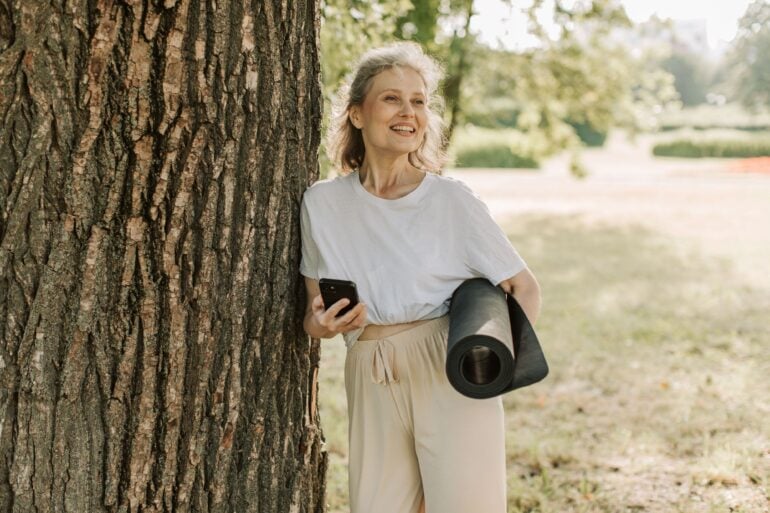
It usually happens quietly. A woman in her late 50s notices a little leak during a jumping jack, a heavy lift, or even a deep stretch in yoga — and without telling anyone, she starts pulling back. She skips the class with the jumping. Then she skips the class altogether. For an enormous number of active women, bladder leaks aren’t just an annoyance; they’re the reason a once-loved fitness routine slowly disappears. And that quiet retreat is exactly the wrong move.
Why Exercise Triggers Leaks — and Why It’s So Common
What’s happening has a name: stress urinary incontinence. “Stress” here doesn’t mean emotional stress — it means physical pressure. When you jump, run, lift, sneeze, or hold certain core-intensive poses, the pressure inside your abdomen spikes. A strong pelvic floor normally absorbs that spike and keeps everything sealed. But after menopause, and often after childbirth years earlier, those muscles can lose tone — so when the pressure surges, a little urine escapes.
This is one of the most common reasons women leak during exercise, and it is absolutely not a signal that your body is “done” with the gym. It’s a muscle issue, and muscle issues respond to the right kind of work.
The Worst Thing You Can Do Is Stop
Giving up exercise to avoid leaks tends to backfire on every front. Less activity often means gradual weight gain, which puts more downward pressure on the pelvic floor. It means weaker muscles overall, including the very ones that control the bladder. And it costs you everything movement protects after 55 — bone density, heart health, balance, mood, and independence.
The encouraging truth is the opposite of what fear suggests: the right exercise generally improves continence rather than worsening it. The goal isn’t to stop moving. It’s to move a little smarter.
How to Keep Training Around Leaks
A few practical adjustments let most women stay active and stay dry:
- Build your pelvic floor — and learn “the Knack.” Consistent pelvic floor training strengthens the muscles over time. Just as useful is the trick of squeezing those muscles just before a cough, jump, or heavy lift, which braces against the pressure surge.
- Breathe, don’t brace-and-hold. Holding your breath during a lift (the Valsalva maneuver) drives pressure straight down onto the pelvic floor. Exhaling through the effort is gentler and just as strong.
- Swap impact when you need to, not forever. On higher-risk days, walking, swimming, cycling, or reformer Pilates keep you moving with less bounce — but don’t abandon strength training, which helps long term.
- Empty before you start, and time your fluids. A quick bathroom trip before class removes a lot of worry. Staying hydrated still matters; just be strategic about timing.
- Wear protection you can forget about. Confidence is half the battle. Discreet, washable leakproof underwear made for movement lets you focus on the workout instead of bracing for an accident — and when the fear is gone, so is the urge to quit.
- See a pelvic floor physiotherapist. Before you decide you “can’t” do impact anymore, get assessed. Many women are surprised how much improves with guided training.
Keep Moving
Bladder leaks during exercise are common, manageable, and — crucially — not a reason to hang up your trainers. With a stronger pelvic floor, a few smart tweaks, and protection that disappears under your leggings, staying active after 55 is entirely within reach. Your future self, still walking, lifting, and stretching, will thank you for not stopping.
FAQ
Is it normal to leak a little during exercise? It’s very common, especially after menopause, and it usually points to stress urinary incontinence rather than anything serious. Common doesn’t mean you have to live with it — it responds well to pelvic floor work.
Should I give up high-impact workouts completely? Not necessarily. Many women manage impact well with a stronger pelvic floor, the “pre-squeeze” technique, and reliable protection. A pelvic floor physiotherapist can tell you what’s right for your body before you rule anything out.
Can the right underwear really make a difference? Yes — mostly by removing the fear factor. Discreet, comfortable, washable protection lets you move freely without constantly worrying about a visible leak, which is often what drives women away from exercise in the first place.