
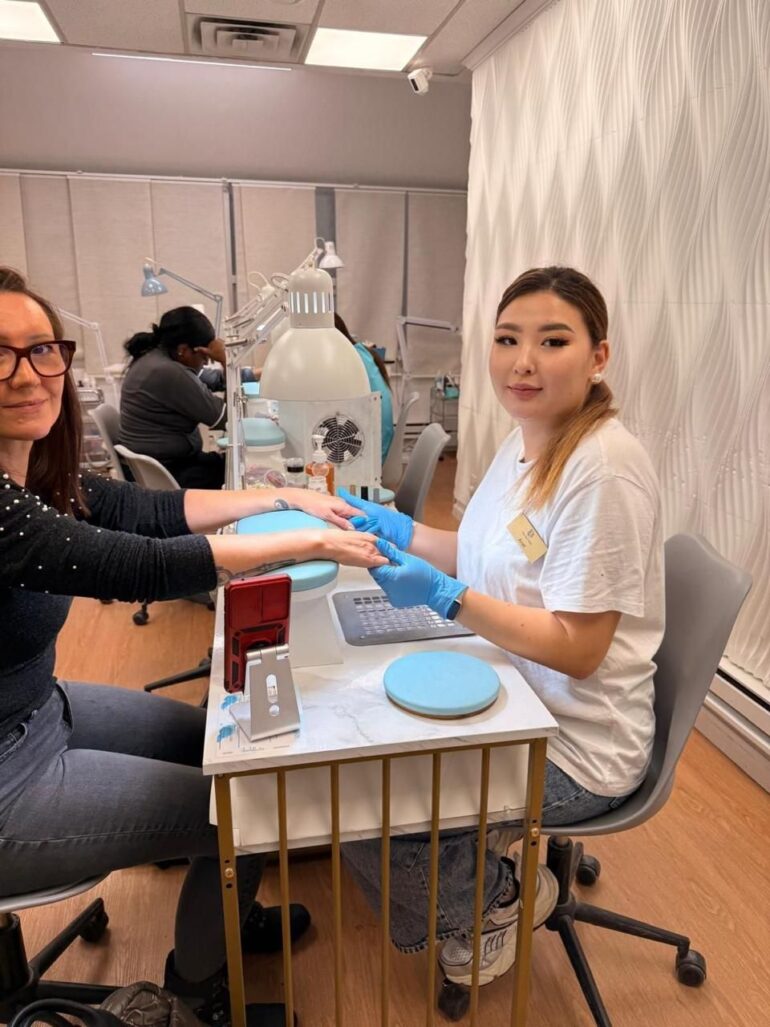
In the modern beauty industry, the issue of sterility has long ceased to be just a recommendation-it’s a fundamental professional standard. International expert Anel Barat emphasizes: “A clean workspace and perfectly crafted tools are not an addition to the quality of service, but its foundation”.
According to Anel, every instrument that comes into contact with a client’s skin or nail plate can be a potential source of infection. Microorganisms, fungal spores, and viruses are invisible to the naked eye, yet they pose real risks. Therefore, proper instrument cleaning is not just part of the job, but a guarantee of the client’s health and the professional’s reputation.
Anel Barat emphasizes an important distinction: disinfection and sterilization are not the same thing. “Disinfection merely reduces the number of microorganisms. Only sterilization-in a dry-heat oven or autoclave-ensures complete safety. No ultraviolet cabinet can replace a real sterilizer”, the expert says.
She adheres to the principle of “one client – one sterile kit” and recommends the following processing algorithm:
1. Cleaning and disinfection – immersion of the instrument in a specialized solution to remove organic matter.
2. Mechanical cleaning – manual or in an ultrasonic bath to completely remove dirt.
3. Sterilization is processing in a dry heat oven or autoclave at high temperature and pressure.
Each set must be stored in an individual container. craft bag with an indicator. Anel notes that this is not only convenient but also increases customer confidence: “When the client sees the craftsman open the bag with “With the indicator triggered, any doubts about the security of the service disappear”.
The expert also emphasizes cleanliness in the work area. The table, lamp, and all surfaces are disinfected after each client, and wipes, nail files, and buffers are strictly disposable. The area should be well-lit, ventilated, and free of strong odors-all of this creates a sense of professionalism and care.
The stylist’s appearance is equally important. Anel believes that a neat uniform, tidy hair, a neutral scent, and personal protective equipment are all part of a client’s respect. “The stylist is the face of the profession. The entire industry is judged by their appearance and work”, she notes.
Anel Barat admits there are still professionals in the industry who ignore health regulations for the sake of speed or cost savings. But she is certain: “No perfect design is worth the risk to your health. The client is entrusting you with their most precious asset-their well-being-and that’s a responsibility that can’t be neglected”.
In her many years of practice, Anel teaches that professionalism in the nail industry begins with sterility. A nail technician who keeps their tools and workspace tidy demonstrates not only technique but also a mature approach to their craft.
Emily Carter