
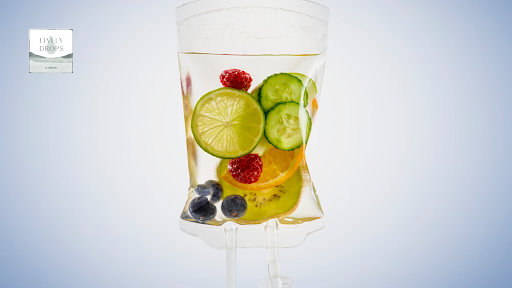
Nothing flushes it out instantly. The body clears the underlying compounds at a fixed rate, and no drip, pill, or drink speeds that chemistry up. What can be shortened is misery, because most of what you feel comes from fluid loss, electrolyte depletion, inflammation, and low blood sugar. A hangover IV targets those symptoms directly. The rest of this piece separates what genuinely helps from what only feels productive.
What You Are Actually Treating
The symptoms have four separate mechanisms. Treating them means treating each one, not chasing a single cure.
The four drivers
- Fluid loss: vasopressin, the hormone that tells the kidneys to hold water, gets suppressed, so urine output climbs and salts leave with it.
- Electrolyte depletion: sodium, potassium, and magnesium fall alongside the fluid volume.
- Inflammation: immune signaling molecules called cytokines rise, and researchers link those markers to the aches, mental fog, and low mood.
- Blood sugar dip: glucose falls, which explains the shakiness, sweating, and flat energy.
The order matters. Fluid volume drives blood pressure, and blood pressure drives how much oxygen reaches the brain, which is why the fog and the headache tend to lift before the aches do. Nausea sits on its own track entirely, driven by gastric irritation and serotonin signaling rather than by fluid status, which is why sipping more water does nothing for it.
The Fastest Route: Fluids Straight to the Bloodstream
Oral fluids work, but they take a detour. Anything you swallow passes through the stomach and small intestine first, and absorption takes 30 to 60 minutes. That timeline stretches when nausea is present, and it collapses entirely if you cannot keep liquid down.
Why the vein is faster
- Bypasses the gut: fluids enter circulation directly, with no absorption delay.
- Full delivery: 100 percent of the volume reaches the bloodstream.
- Works through nausea: no swallowing required.
- Volume: a standard 1 liter bag of normal saline restores what an hour of sipping would not.
A hangover IV typically runs 1 liter of normal saline, which carries 154 milliequivalents per liter of sodium and chloride. Sessions take 35 to 45 minutes. Lively Drops builds its hangover formula around B complex and vitamin C, with anti-nausea and anti-inflammatory medications available as add-ons.
The Symptom Stack and What Each Treatment Does
Fluid volume solves one problem. It does not solve all of them.
Matching the symptom to the fix
- Headache and body aches: an anti-inflammatory such as ketorolac addresses the inflammatory component.
- Nausea and vomiting: ondansetron blocks the serotonin receptors that trigger the reflex.
- Fatigue and fog: restored blood volume lifts blood pressure and cerebral perfusion.
- Low blood sugar: complex carbohydrates by mouth, once you can eat.
B vitamins get marketed hard, and the evidence there is thinner than the marketing suggests. They are water soluble, so excess is filtered out by the kidneys rather than stored. Their role is supportive, not curative. Magnesium is the more interesting one, since it is lost heavily through urine and is involved in muscle function and nerve signaling, though research on supplementing it for recovery remains limited.
Lively Drops includes ondansetron and ketorolac as add-ons for that reason. Anti-nausea medication changes the math more than any vitamin does. Once vomiting stops, oral fluids become possible again, and that alone breaks the cycle where a person cannot keep down the very thing they need.
The real work is done by fluid volume, electrolytes, and the symptom medications. Anyone promising a cure is overselling it, and the honest version is that a hangover IV shortens the worst hours rather than erasing them.
What Actually Helps at Home
Not everyone needs a drip. Several things help, and several popular ones do not.
What works
- Water plus electrolytes: oral rehydration solutions beat plain water, because sodium and glucose together pull water across the gut wall through the sodium glucose cotransporter.
- Sleep: the single most restorative intervention, and the one most people skip.
- Eating: complex carbohydrates bring blood sugar back toward baseline.
- Time: the clearance rate is fixed, and nothing changes it.
What does not work
- Coffee: it does not speed clearance, and its diuretic effect works against you.
- Sweating it out: exercise and saunas pull out more fluid, which deepens the problem.
- Painkillers containing acetaminophen: the liver is already under load, and the maximum safe amount is 4,000 mg in 24 hours, a ceiling that is easy to cross when the drug hides inside combination cold and pain products.
Reach for an anti-inflammatory instead, and only with food.
The Timeline You Can Realistically Expect
Recovery follows a predictable curve, and knowing it prevents panic.
Hour by hour
- 0 to 30 minutes on fluids: blood volume rises, and dizziness and thirst begin to ease.
- 30 to 60 minutes: nausea settles if an anti-nausea medication was given, and the headache starts to lift.
- 1 to 3 hours: energy returns as blood pressure and perfusion normalize.
- 6 to 24 hours: the remaining inflammatory symptoms resolve on their own schedule.
Severe symptoms are a different category. Confusion, fainting, no urination at all, a racing heart, or rapid breathing point to a medical emergency, not a wellness appointment. Our team screens for those signs before treating anyone, and we decline cases that belong in an emergency department. That line is the difference between a comfort service and a medical one.
Who Should Skip the Drip
A hangover IV is not right for everyone, and any provider who says otherwise is not screening properly.
Reasons to avoid or delay
- Heart failure or kidney disease: extra fluid volume can overload a system that cannot clear it.
- Uncontrolled high blood pressure: the sodium load in saline is not trivial.
- Pregnancy: requires physician clearance first.
- Severe symptoms listed above: those need an emergency department.
Cost matters too. A drip runs a few hundred dollars, while oral rehydration salts cost a few dollars and work well for mild cases. The drip earns its price when nausea blocks oral intake, when the fluid deficit is large, or when the day cannot be lost. Otherwise, salts, food, and sleep get you there for almost nothing.
Choosing Between Patience and a Drip
The fastest realistic path is fluids, electrolytes, targeted symptom relief, food, and sleep. Fluids by vein act sooner than fluids by mouth, and that gap matters most when nausea shuts down swallowing. Nothing shortens the underlying clearance time, so treat the symptoms and let biology handle the rest.
Lively Drops sends licensed nurses across Long Beach and the surrounding beach cities, and every booking begins with a medical screening. Call (562) 665-2822 to talk with our team about whether a drip fits your situation.