
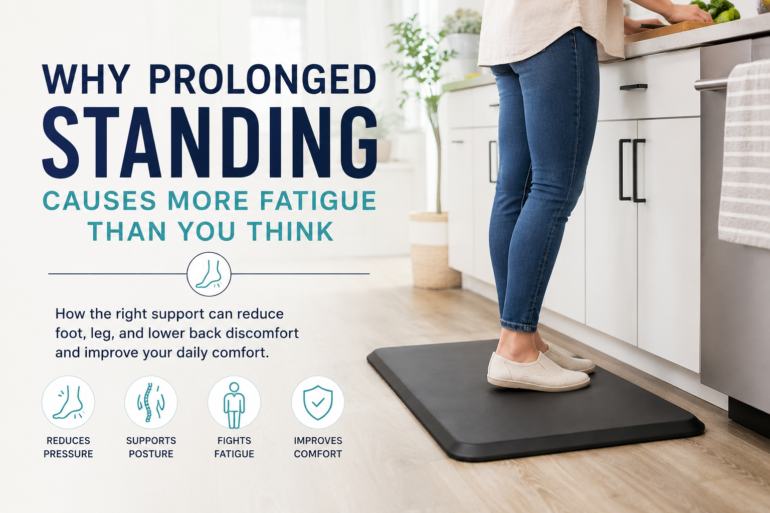
For many people, standing seems like the healthier alternative to sitting all day. Standing desks have become more common, retail workers spend entire shifts on their feet, and home cooks can easily spend hours in the kitchen without realizing how much strain prolonged standing places on the body.
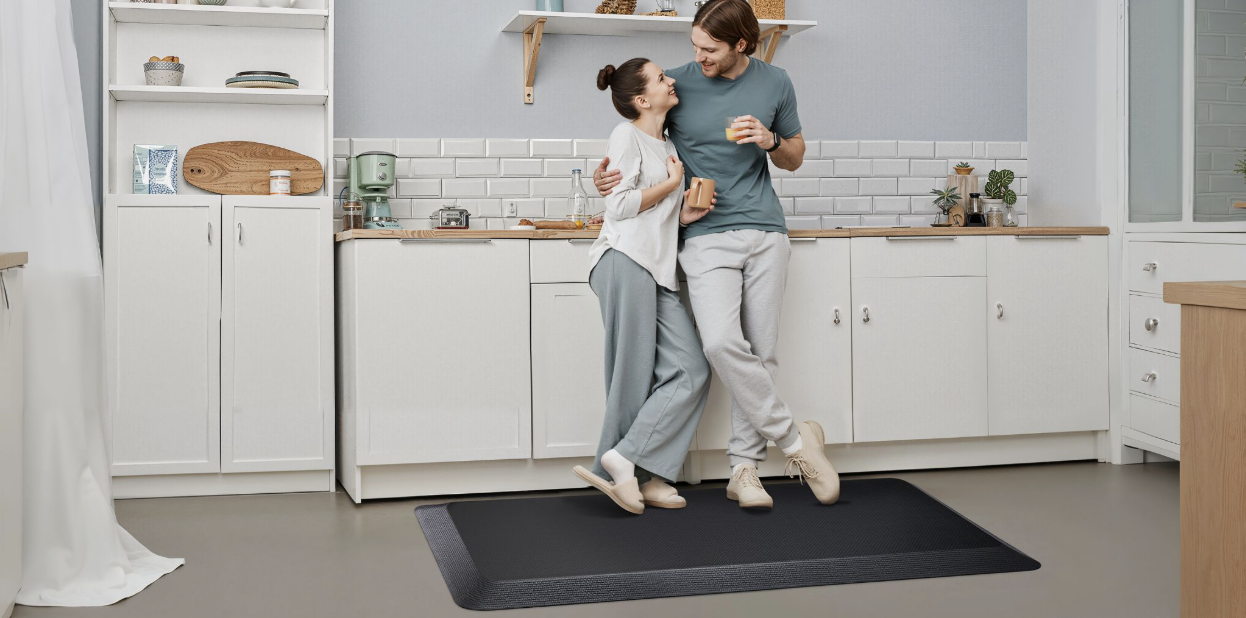
But while standing does encourage movement and posture changes, remaining in one position for long periods can create its own set of physical challenges. Foot soreness, tight calves, lower back discomfort, and overall fatigue are all common complaints among people who spend much of their day upright.
The issue is not necessarily standing itself — it is the combination of pressure, hard flooring surfaces, and limited movement over time.
The Physical Effects of Long-Term Standing
When you stand for extended periods on hard surfaces such as tile, concrete, hardwood, or laminate flooring, your muscles must continuously work to stabilize your posture. Over time, this constant engagement can reduce circulation efficiency and place excess pressure on joints and soft tissues.
The feet absorb much of this impact first, but the strain often travels upward through the ankles, knees, hips, and lower back. Many people notice symptoms gradually throughout the day, including:
- Aching feet or heels
- Lower back tightness
- Leg fatigue or stiffness
- Knee discomfort
- Reduced energy and concentration
Research on workplace ergonomics has also shown that prolonged standing may contribute to musculoskeletal discomfort when proper support is not available.
Why Surface Support Matters
One overlooked factor in standing comfort is the type of surface beneath your feet. Hard flooring provides very little shock absorption, forcing the body to absorb repeated micro-pressure throughout the day.
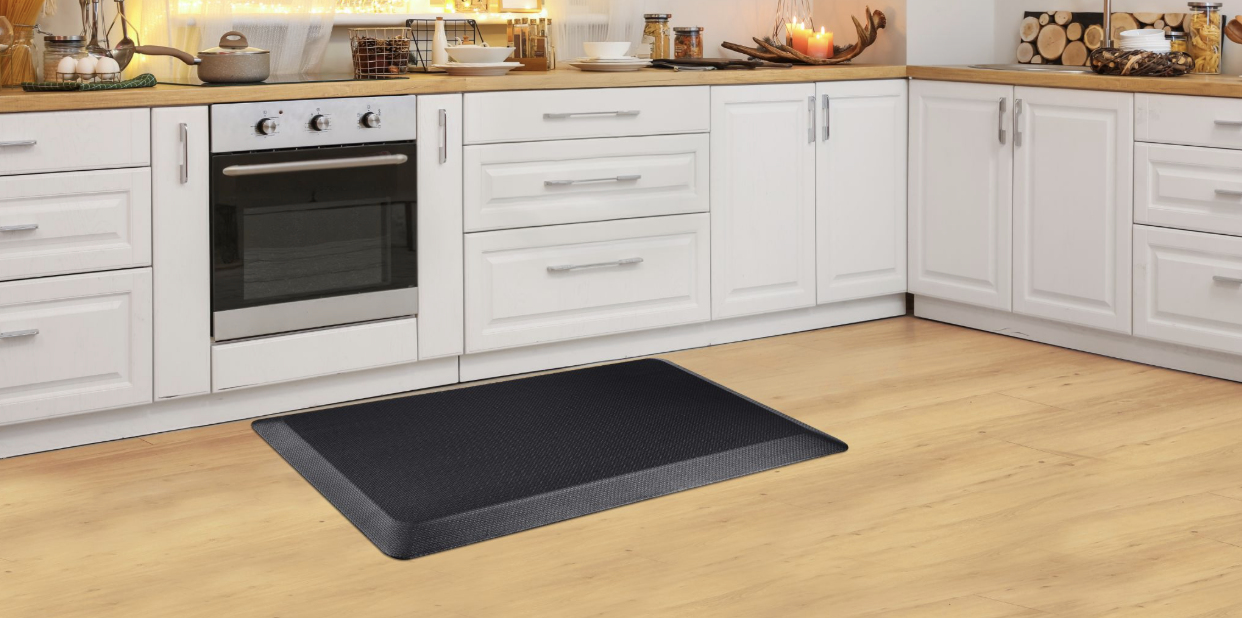
This is one reason anti-fatigue mats have become increasingly common in workplaces, commercial kitchens, salons, workshops, and home offices. These mats are designed to provide cushioning and support that encourage subtle muscle movement and reduce concentrated pressure on the lower body.
A well-designed ergonomic standing mat can help reduce fatigue by improving weight distribution and minimizing the stress placed on joints during prolonged standing periods.
Products such as the FEATOL ergonomic standing mat use high-density cushioning materials designed to balance softness with support. Unlike overly soft surfaces that may destabilize posture, supportive anti-fatigue mats aim to provide enough rebound to reduce strain while maintaining stability.
Common Places Where Fatigue Builds Up
Many people associate anti-fatigue mats primarily with industrial workplaces, but they are increasingly useful in everyday home environments as well.
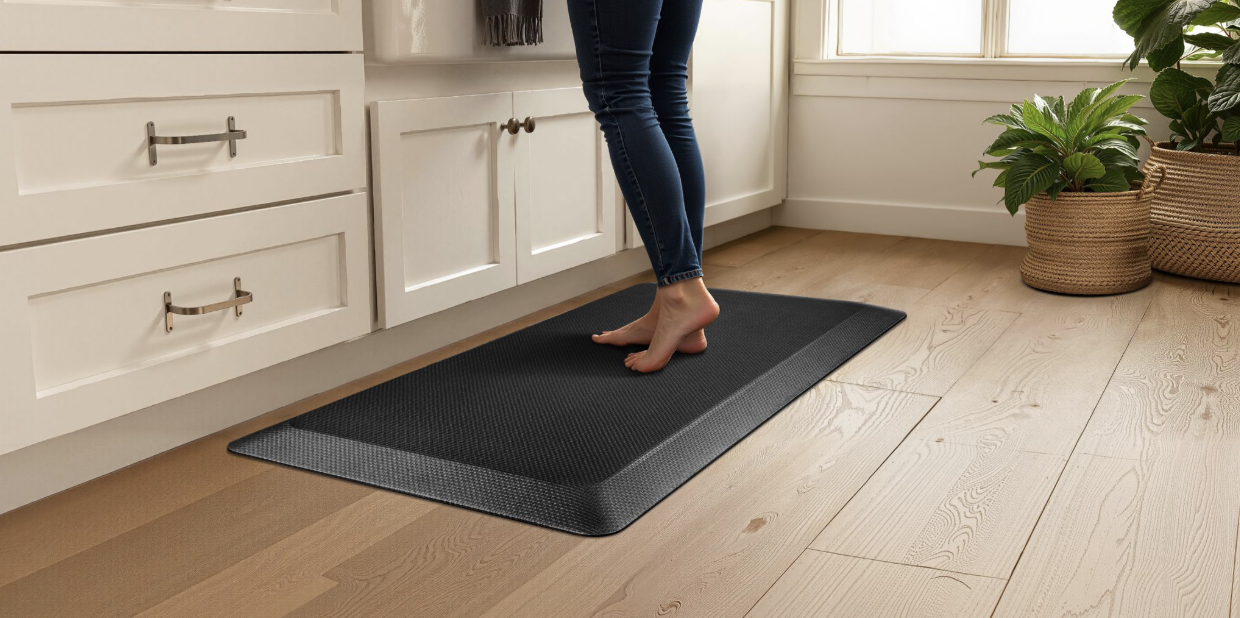
Some of the most common standing-heavy areas include:
- Kitchen counters during meal preparation
- Standing desk workstations
- Laundry rooms
- Retail checkout counters
- Reception desks
- Salon or barber stations
- Garage workbenches
Even relatively short periods of standing can feel more exhausting when repeated daily without adequate support.
Choosing the Right Anti-Fatigue Mat
Not all standing mats offer the same level of comfort or durability. Thickness, material quality, edge design, and slip resistance all play important roles in both comfort and safety.
When choosing a mat, it helps to consider:
- Cushion density rather than softness alone
- Non-slip backing for stability
- Beveled edges to reduce tripping risk
- Easy-to-clean surfaces for kitchens or work areas
- Proper sizing for the intended space
Brands such as FEATOL offer anti-fatigue mats designed with many of these features in mind, including supportive cushioning, non-slip backing, and durable surfaces suitable for both home and workplace environments.
For standing desk setups, mats with moderate thickness often provide the best balance between comfort and posture support. In kitchen environments, stain resistance and easy cleaning become more important.
Small Changes Can Improve Daily Comfort
While prolonged standing may be unavoidable for many people, small ergonomic improvements can make a noticeable difference over time. Alternating posture, wearing supportive footwear, stretching regularly, and improving floor cushioning can all help reduce daily fatigue.
Small changes can make a big difference in everyday comfort. Whether you’re setting up a standing desk or upgrading your kitchen workspace, choosing a high-quality anti-fatigue mat can help support better posture and reduce physical strain. Consider FEATOL’s range of anti-fatigue mats to create a more comfortable standing experience.