
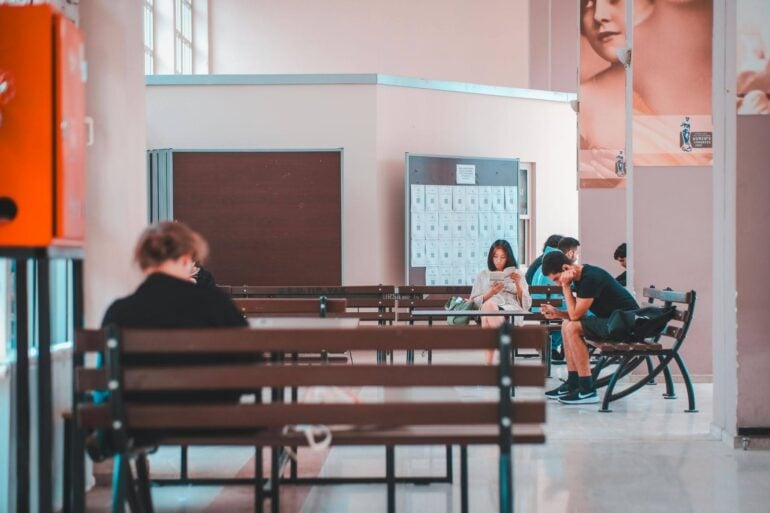
We have all been there. You are sitting on a plastic chair under fluorescent lights that are just a bit too bright. The clock on the wall says it is three in the morning, but time loses all meaning in an emergency room waiting area. Someone nearby is coughing loudly, the vending machine is humming, and you have been waiting for four hours just to have a doctor spend five minutes looking at your swollen ankle or listening to your chest congestion.
For decades, this was the undisputed price of admission for acute medical care. If you got sick after your regular doctor went home, you packed a bag, braced your wallet, and drove to the hospital. There simply was no alternative.
But a quiet revolution is happening right now in neighborhoods across the country. People are looking at that old, stressful routine and asking a completely reasonable question. Why am I traveling to the medicine when the medicine could easily travel to me?
Flipping the Hospital Script
The shift we are seeing today is not about basic home health visits or having a nurse come by to check your blood pressure. It is about a fundamental relocation of emergency medicine. People are beginning to realize that a huge portion of what happens inside a traditional emergency room does not actually require the physical brick and mortar of a hospital building.
Think about what actually happens during most urgent hospital visits. You need blood work drawn, an IV started, an EKG run, or maybe an ultrasound to see what is going on beneath the surface. Today, the technology required to do all of those things fits comfortably into a couple of duffel bags in the trunk of a standard vehicle.
When you strip away the massive building, the administrative layers, and the endless overhead costs of running a twenty-four-hour hospital complex, the economics of healthcare change completely. Traditional emergency room visits can easily climb into thousands of dollars for even minor issues. Treating those exact same conditions on a living room couch costs a fraction of that amount. It is a rare moment where the option that feels most luxurious, having a medical team come directly to your door, is actually the option that makes the most financial sense.
A Cultural Shift Toward True Comfort
This entire movement is being driven by a change in what patients expect from the healthcare system. The modern consumer expects convenience in every other aspect of life, from groceries to banking, so it was only a matter of time before they demanded it from medicine.
Public discussions around healthcare infrastructure have been focusing heavily on the sheer exhaustion of the modern medical workforce and the increasing strain on public transit systems in major cities. For an elderly patient, a person with mobility issues, or a parent with three young children, just getting to an emergency room is a massive obstacle. When you add the risk of catching something else while sitting in a crowded waiting room, the traditional hospital visit starts to look less like a place of healing and more like a logistical nightmare.
This is exactly why companies built around mobility are seeing such a massive surge in interest. Lon Hecht, the CEO of Care2U, recently pointed out that millions of people end up in stressful hospital environments every single year for conditions that could be managed completely and safely at home. It is a perspective that highlights the disconnect in our current system. We have been defaulting to the most expensive, most disruptive option simply because that is the way we have always done it.
When a clinician walks into a patient’s home, the entire dynamic of care changes. The patient is in their own environment, surrounded by their own comforts, and their stress levels drop instantly. Doctors and nurses get to see the full picture of a person’s life, which often leads to much better, more personalized care. It turns out that healing happens a lot faster when you are resting in your own bed rather than lying on a gurney behind a thin fabric curtain.
The Future is Coming to Your Living Room
We are moving toward a world where the hospital will no longer be a default destination for every sudden illness or injury. Instead, the hospital will be reserved exclusively for major surgeries, intensive care, and true life-threatening trauma. For everything else, the care will come to us.
This change is not just a temporary trend or a high-tech novelty. It is a long-overdue correction to a system that has put institutional convenience ahead of patient comfort for far too long. By moving emergency care into the home, we are creating a healthcare model that is more affordable, more humane, and deeply respectful of a patient’s time and dignity. The era of waiting out the clock in a crowded ER is finally coming to an end, and the future of medicine is arriving right at the front door.