

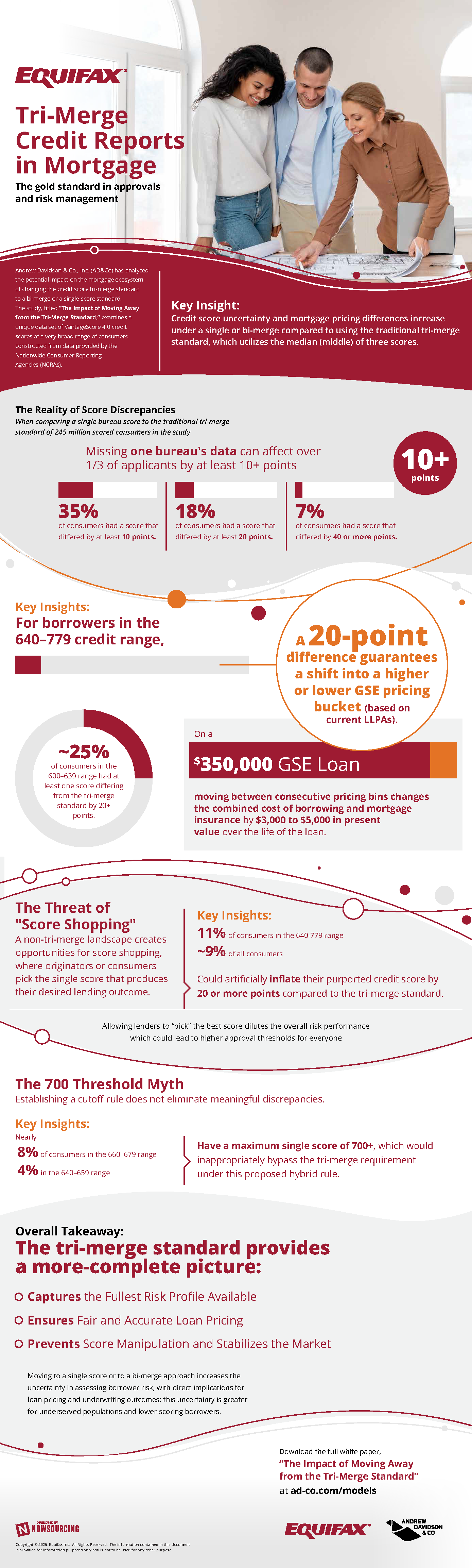
In recent years, some lenders have been moving away from tri-merge credit reports, which has been the gold standard of credit checks in the industry. Most often, lenders have been using a bi-merge credit report instead. This involves ordering credit reports from 2 of the 3 major credit bureaus and comparing the financial history between them. However, missing even 1 credit bureau’s information can have a major impact.
It is estimated 35% of consumers have a credit score difference of 10 points or more when using the bi-merge and tri-merge methods and 18% are guaranteed to be in the pricing bucket based on the current LLPAs. On a $350,000 loan, this would mean that borrowers are being overcharged or undercharged anywhere between $3,000 to $5,000. This issue is even more prevalent with individuals with lower credit scores, specifically between the 600 to 639 credit range. It can also enable people to ‘shop around’ loans, or trying to find loans that are a better price than what they should qualify for.
Ultimately, omitting the smallest amount of financial data can have substantial impacts on how the loan is priced. If you want to make sure that your borrowers are getting the right price on their loans, ordering tri-merge credit reports is the only way to go.
Source: Equifax